


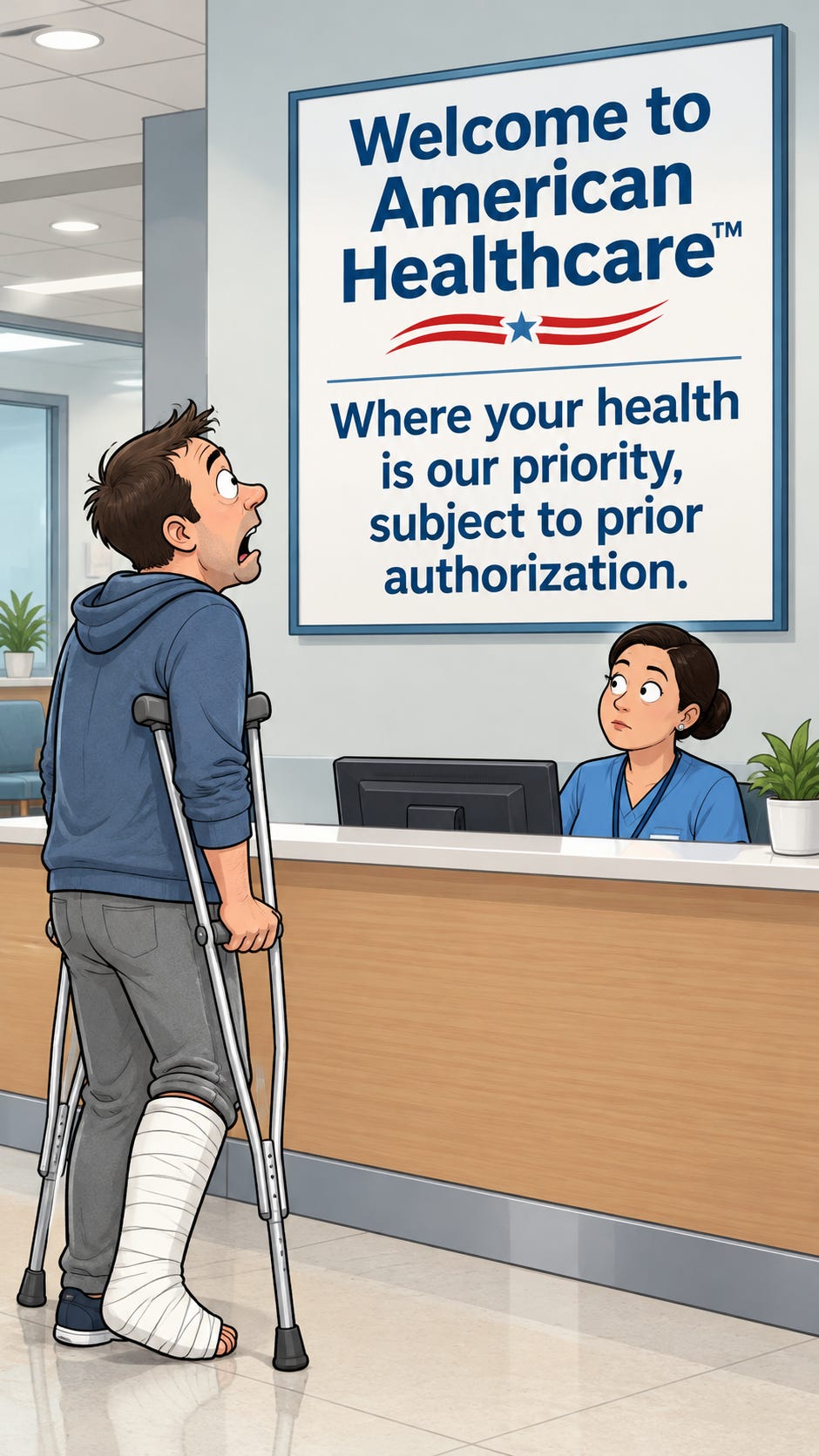
I don’t pay for health insurance. Scary, right?
I’m self-employed, and I haven’t found an option that feels worth the cost. For me, the sticking point is value: what am I paying for, and what am I actually getting back?
That question gets harder to shake when I look at the bigger picture. In its 2024 comparison of 10 wealthy countries, the Commonwealth Fund ranked the U.S. healthcare system last overall and last on health outcomes—even though we spend the most. That doesn’t exactly inspire my confidence.
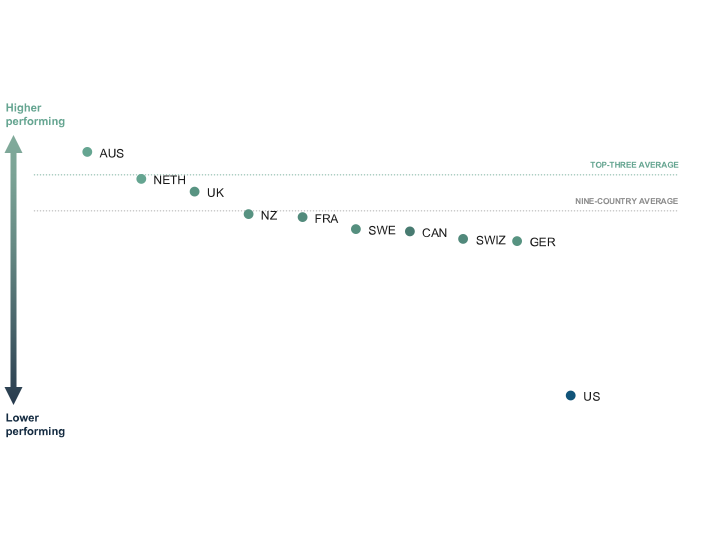
Source: commonwealthfund.org
But being skeptical of the system doesn’t make me immune to getting sick. So last year, I ordered a boatload of blood tests through an online service.
The results opened my eyes—and raised questions I hadn’t known to ask.
While I won’t get into all my results, five PFAS compounds—often called “forever chemicals”—showed up in my blood. I generally eat well, avoid most processed foods, and cook most of my meals. So where had they come from? I couldn’t trace them to a particular source.
That left me wondering: how do I make informed choices about things I can’t see? And how do I know whether something I buy to improve my health is actually helping—or whether I’m just buying a convincing story? The same question applies to everyday products like soap and shampoo.
A Label and a Promise
That’s when I started noticing the gap—not a shortage of health products, but a shortage of clear answers about them.
At home, we have tools like fitness trackers, scales, and blood pressure cuffs. They give us specific measurements. In medical settings, we have blood tests, imaging, and professional care.
But when I’m standing in a store choosing a supplement, shampoo, or household cleaner, I’m usually looking at a label and a promise. What helps me judge that promise?
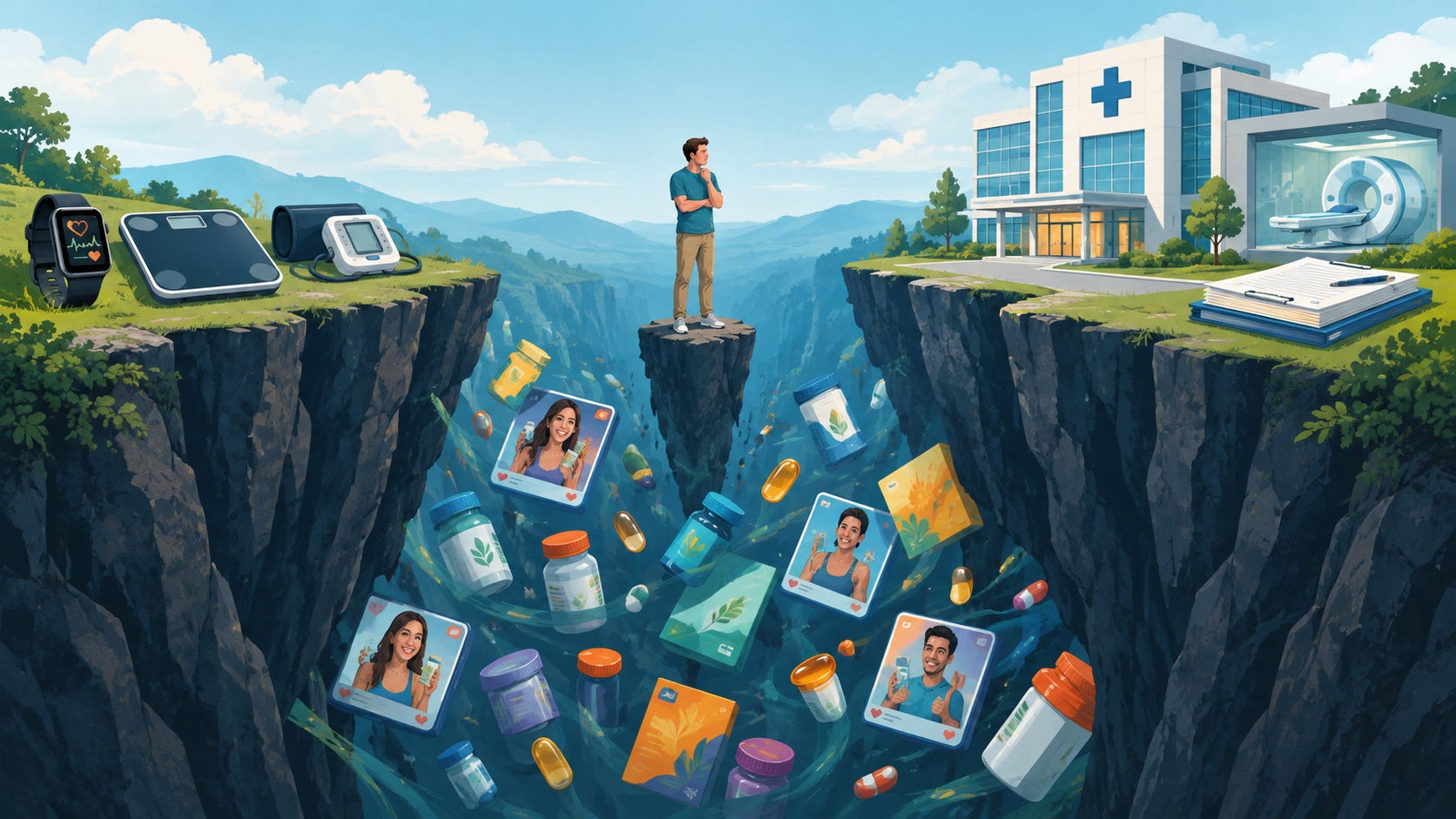
Too often, I’m left with advertising, testimonials, and influencers selling certainty. Even when a product comes from a company with good intentions, I still want to know: what evidence supports the promise?
Have you ever taken a supplement for six months and still wondered whether it was doing anything? That’s the frustration I want Crunchy Nation to help address—not by adding another confident sales pitch, but by making the questions, methods, findings, and limitations visible.
That’s Where Crunchy Nation Comes In
To be clear, Crunchy Nation isn’t here to replace your fitness tracker, your blood pressure cuff, your doctor or the hospital. Those all have their place. It IS here to replace the marketing hype that influences what we buy and what we do next—whether we asked for that influence or not.
Who wouldn’t want to be able to ask better questions and make more informed choices about their next steps towards better health? The technology we use maps out your entire body and provides detailed clues across 84 categories.
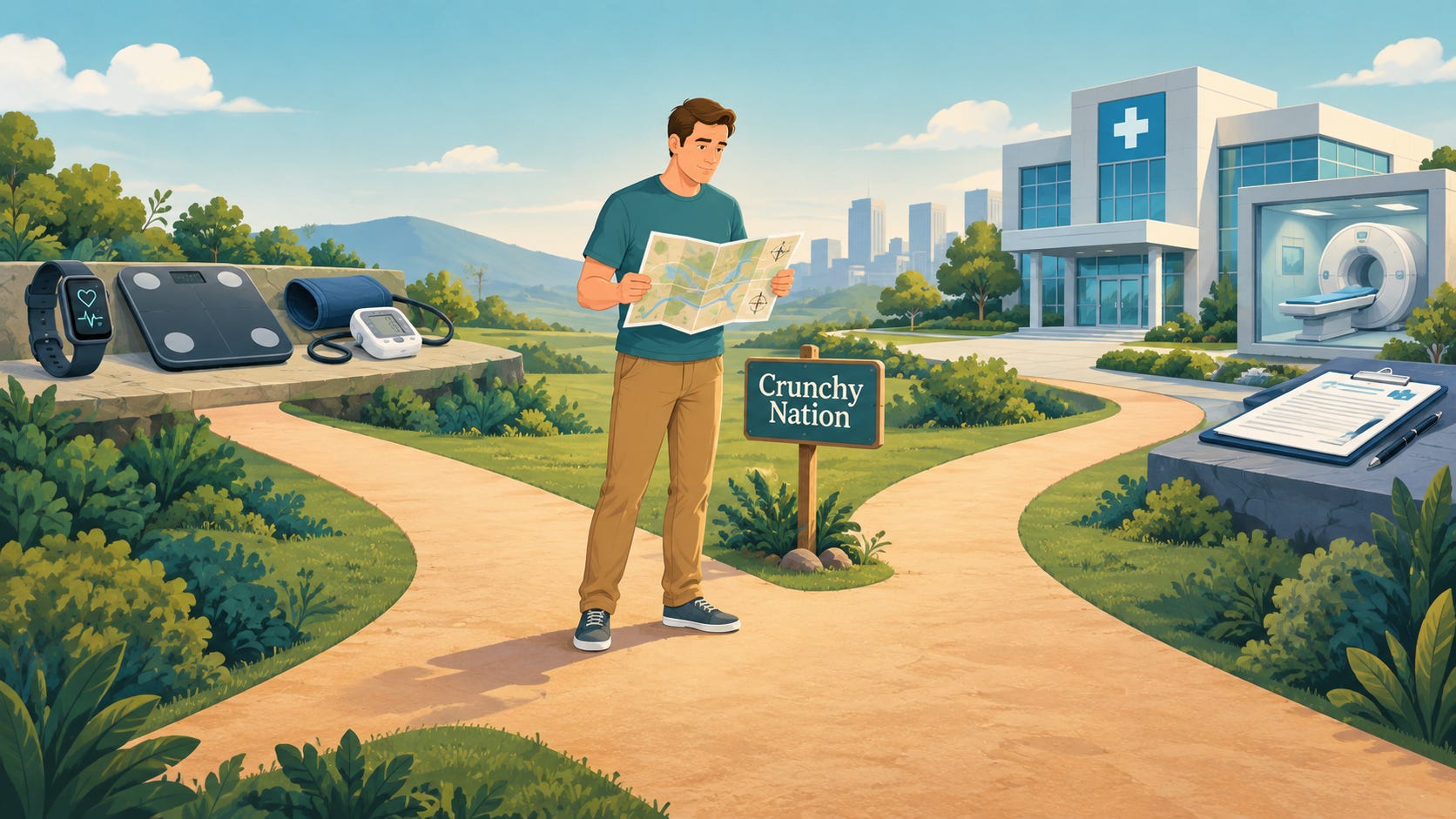
Crunchy Nation is not just me. Crunchy Nation is every person who wants better health. People who want to know if a food, supplement or personal care product is actually GOOD for THEIR body. Anyone who tries to make good food choices, avoids processed foods, limits their sugar intake and approaches life with moderation is part of Crunchy Nation.
The really “crunchy” ones have their own food garden, might raise chickens, are interested in canning, cook their meals at home and probably know how to bake a pie from scratch. Some home school their kids (or wish they could). But all Crunchy Nation tribe members strive to take more control over their health through everyday choices.
Crunchy Nation is striving to make that self-driven control possible in a sea of fake claims, marketing hype and an ocean of complete B.S. And the reason Crunchy Nation is possible is a non-invasive technology that’s been around for decades and is in use in 50+ countries, yet I’d never heard of it before.
I Was Skeptical, Too
In fact, I only found out about it because a Swedish friend who works in health mentioned the technology. When I first heard about it, I was 95% confident it was fake. But the possibility stuck with me. After researching it for two years, I bought the equipment. If it did actually work as advertised, it would fill the knowledge gap. So I made the leap.
Imagine sitting at home with a device smaller than a VHS cassette—remember those?—and exploring questions about the food, supplements, and personal care products your family uses. You could test all kinds of items in your household, learn how your current shopping habits might be affecting each member of your family and adjust your shopping accordingly. No marketing hype required.
I’ve already covered in another article how I also used the same technology on my oak pollen allergy. I spent MONTHS last year wanting to claw my eyes out - oak pollen season in Clearwater, FL can be brutal. This year I scanned my sinuses and eyes, spent about $10 at the grocery store on a few supportive food items, and 4 days later it was like I never even had the allergy in the first place. To me that’s way better than taking Benadryl every day.
Now, here are the disclaimers. The technology we use is considered educational and not a diagnostic tool. It’s certainly not a blood test, x-ray or MRI. It can’t actually diagnose anything because, A. it’s not a doctor (neither am I) and, B. the monopoly of Big Health does not look kindly on anyone helping someone get over a health challenge without their drugs. It’s just they way it is.
What If We Connected the Dots—Together?
How much is useful knowledge worth when it comes to health? What if that useful knowledge were multiplied 100,000 times? For example, if 100,000 people across the nation were testing themselves and others, using this non-invasive technology, and we were able to add up all of the results, and we were able to identify patterns worth investigating—and products whose promises deserve closer scrutiny. Marketing hype be damned!
That’s Crunchy Nation. I want to fill the gap between the cheap but limited testing tools and the expensive, monopolistic-oriented medical industry with a “regular person” testing tool that puts us consumers in control.
Crunchy Nation is here to protect you, your family, your community and your whole nation with data that WE put together.
So, yes, this is a calling for me. Because I can’t be the only one drowning and choking on marketing hype backed by the full force of AI and decades of marketing techniques designed to make me buy stuff I don’t need (and that doesn’t even work), so that I can pretend I’ll be as healthy as the influencer that probably doesn’t even use whatever it is they are hawking.
Will you join us and support our mission?
The simplest way to support this work is to become a paid subscriber right here on Substack.
Paid subscriptions help fund Crunchy Nation’s independent product studies, reporting, and the systems behind them. Free readers receive selected articles and study previews.
What paid subscribers receive
Paid subscribers receive the full reports we publish from community-funded studies—including methods, anonymized aggregate findings, and limitations—as they become available. Confidential sponsor-funded studies are excluded.
Paid subscribers can also register interest in future compensated studies and our planned independent-scanner network. We’ll share eligibility, costs, training requirements, and compensation terms before anyone commits. Subscription does not include equipment, operator training, or a guaranteed place, income, or assignment.
Want to help build Crunchy Nation? See all the ways to support the mission—including becoming a paid subscriber. Click the button below.