


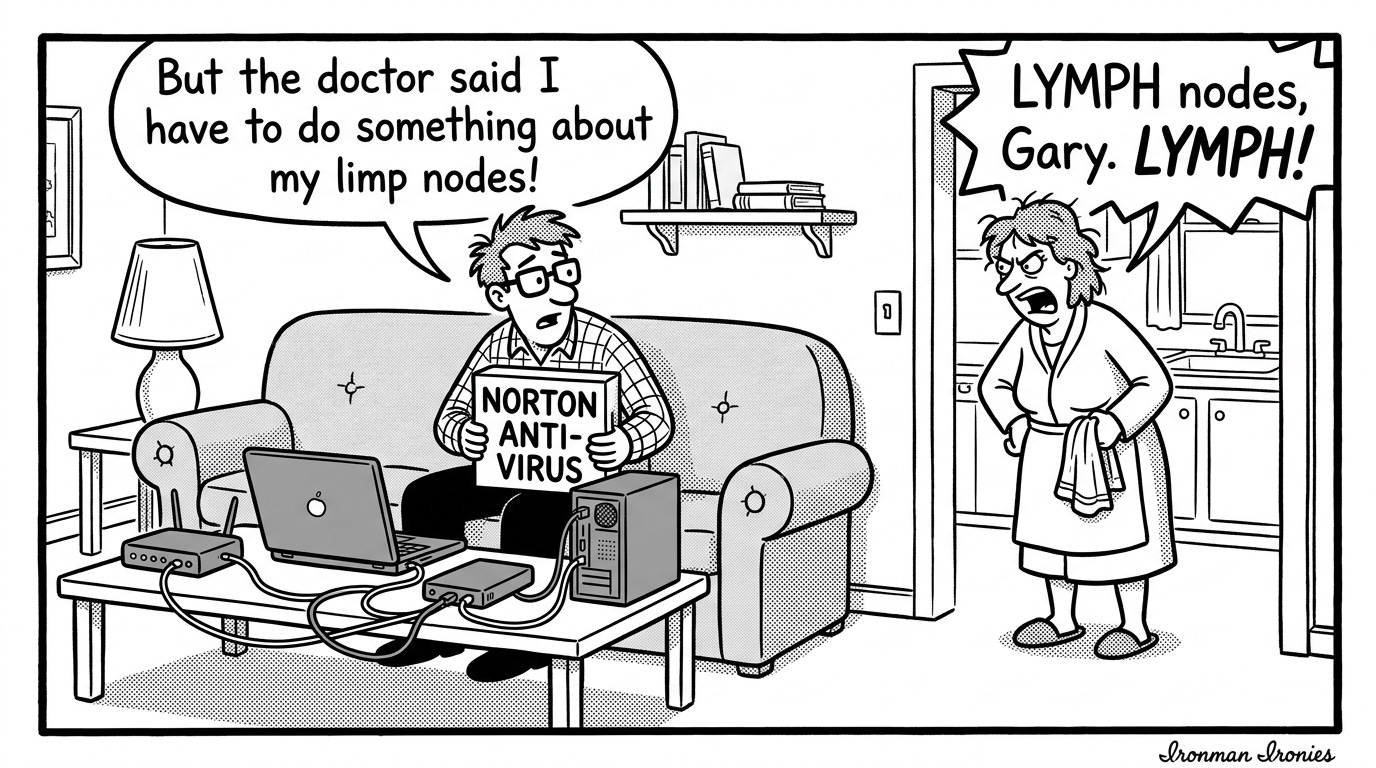
About a year ago I got one of those thermography scans as part of a deep dive on my health. Let’s just call it my mid-life crisis checkup. Just in case there was something bad lurking in my body that I didn’t know about. I was mostly fine, but the doctor who evaluated my scan pointed out my lymph system looked inflamed, and I should do something about it.
So I pulled up Google and worked it over. I don’t like to run, I know I won’t bike and it’s too hot to walk in Florida most of the year. I could see getting more exercise was going to be a challenge for me. Finally I settled on rebounding using a mini-trampoline. Quick, no sweating, and relatively cheap. Just my style.
You know, I didn’t notice ANY difference after several weeks of daily rebounding. So, no great surprise, the rebounder eventually ended up unused most of the time.
Then I got a MetaHunter scanner. So now I could instantly test if the rebounder actually had an effect on my lymph system or not.
The Setup
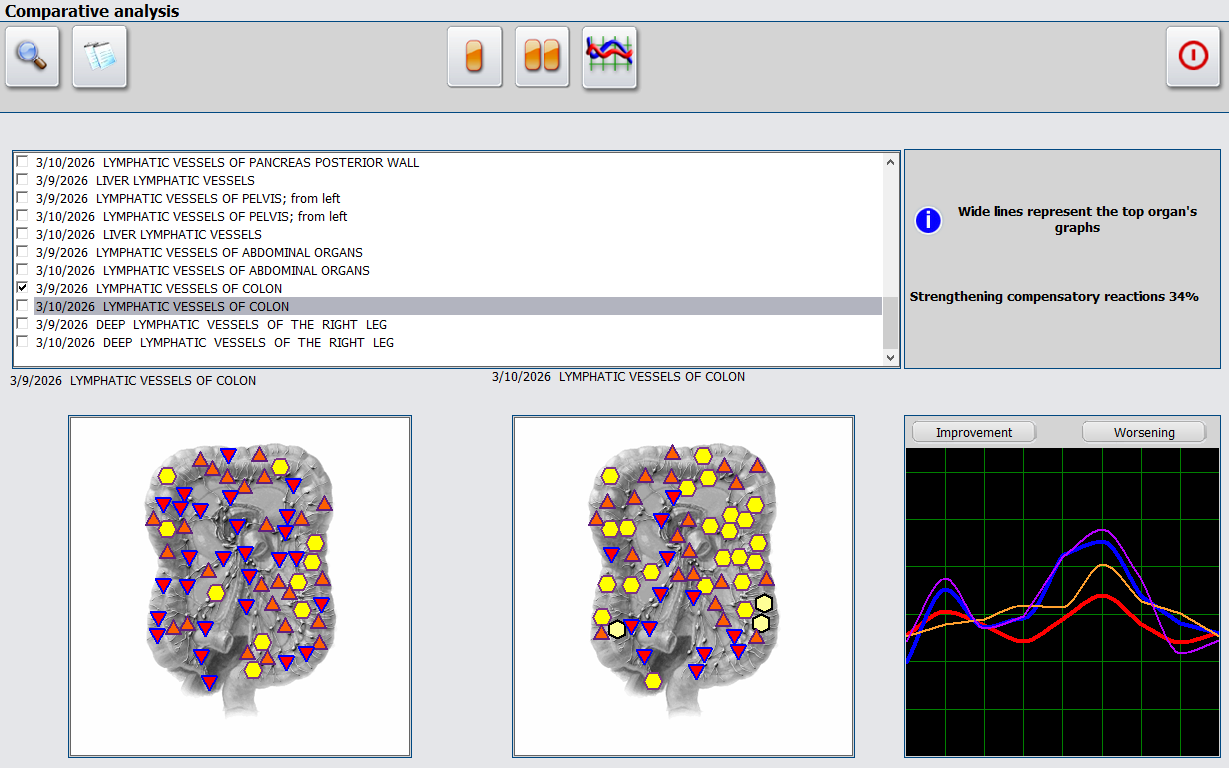
I used my Meta Hunter scanner, which shows pictures of organs and lymph vessels with little colored shapes on them. Like this one:
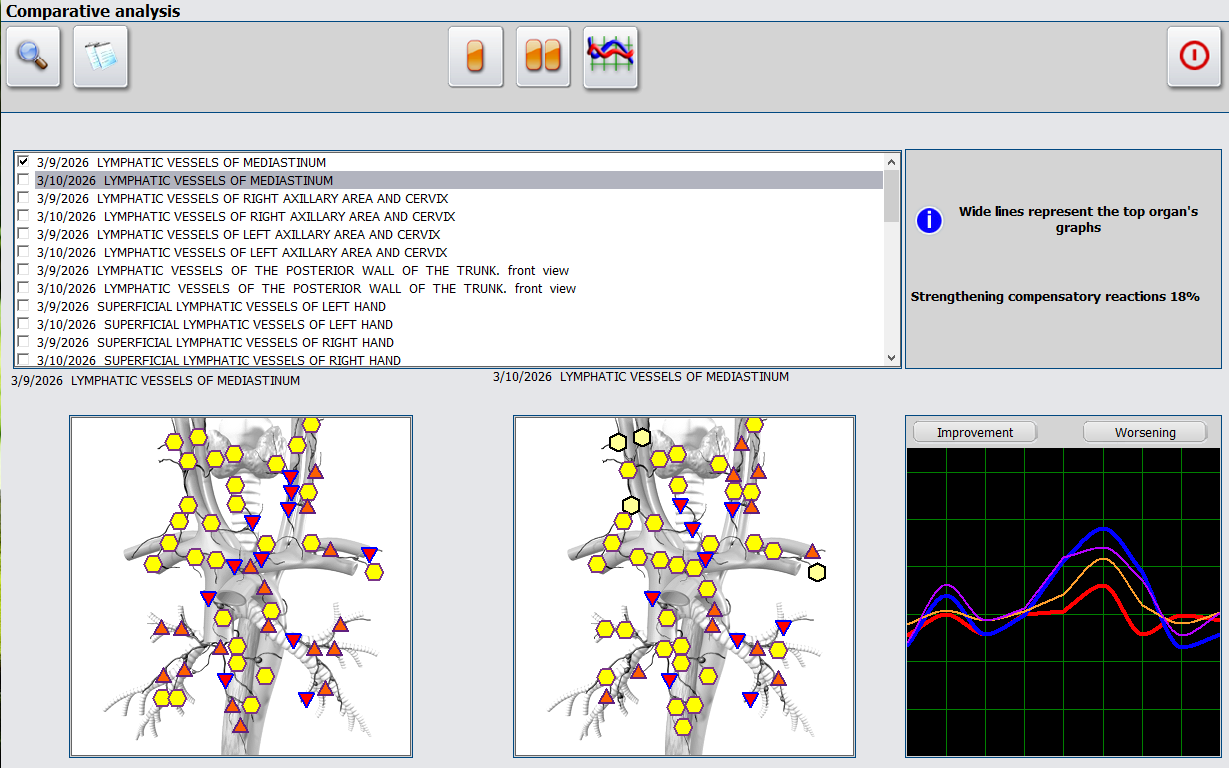
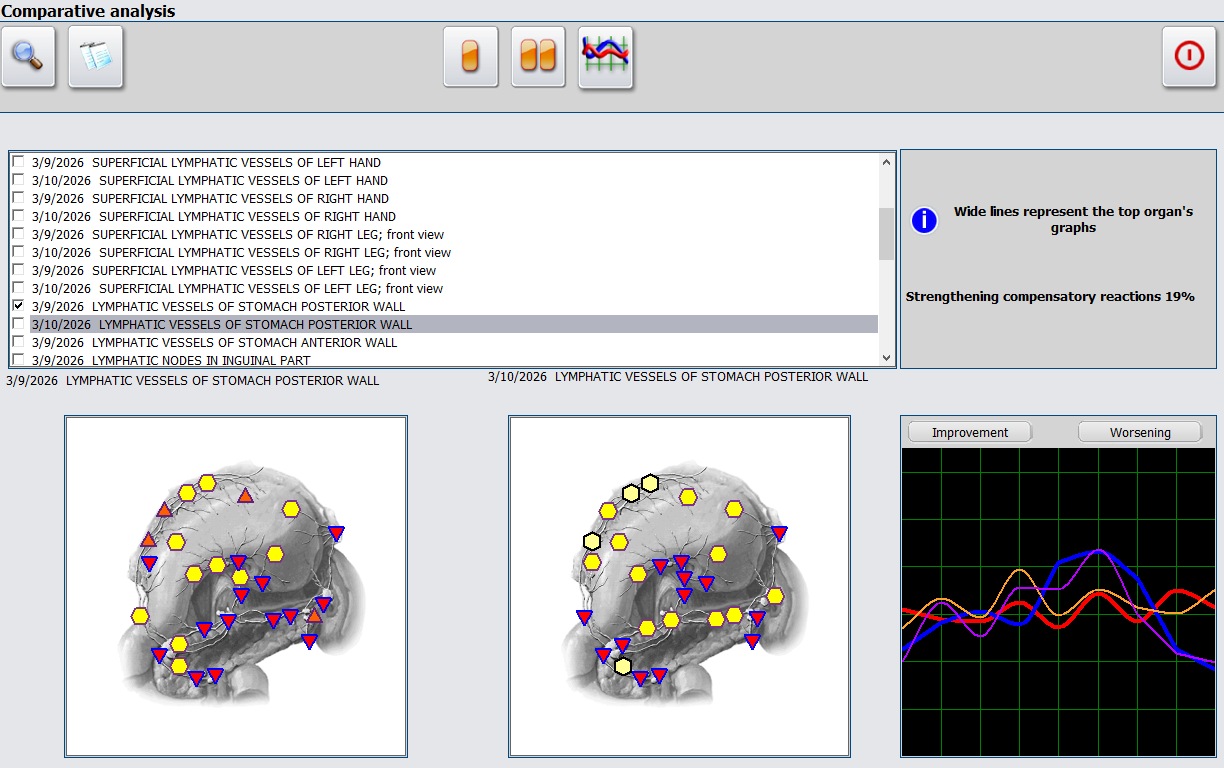
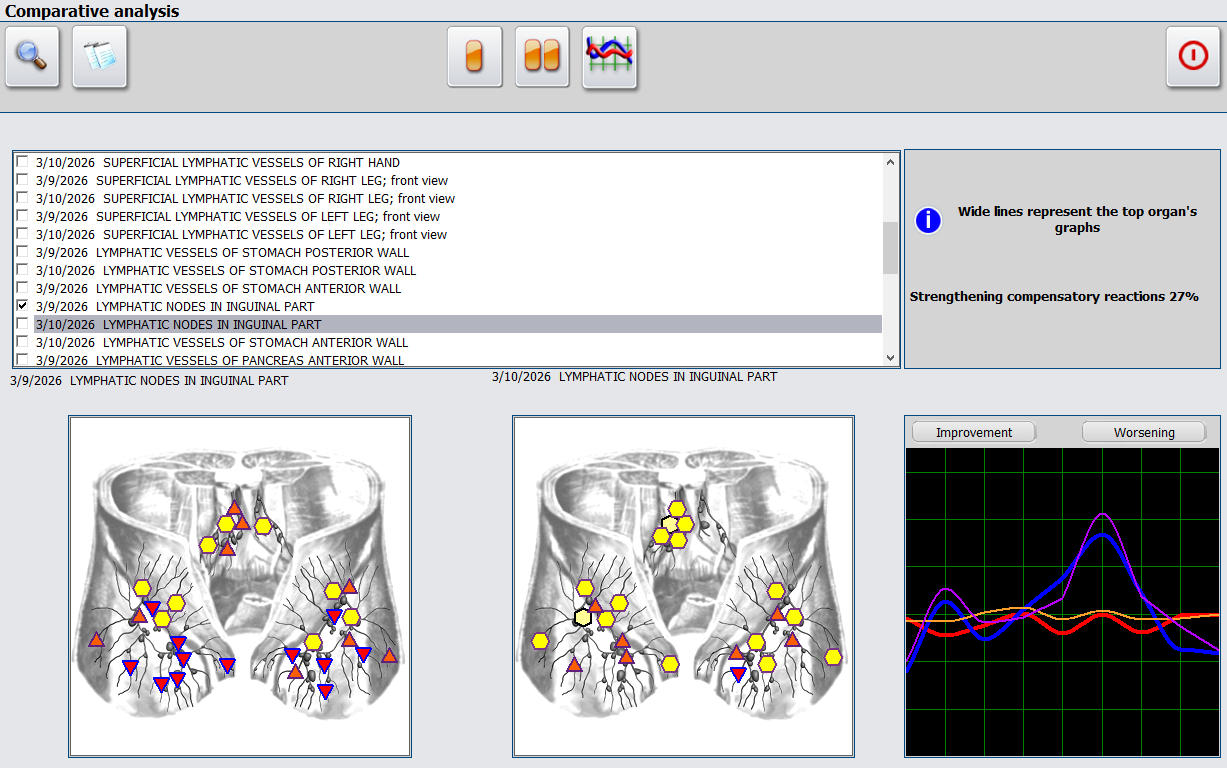
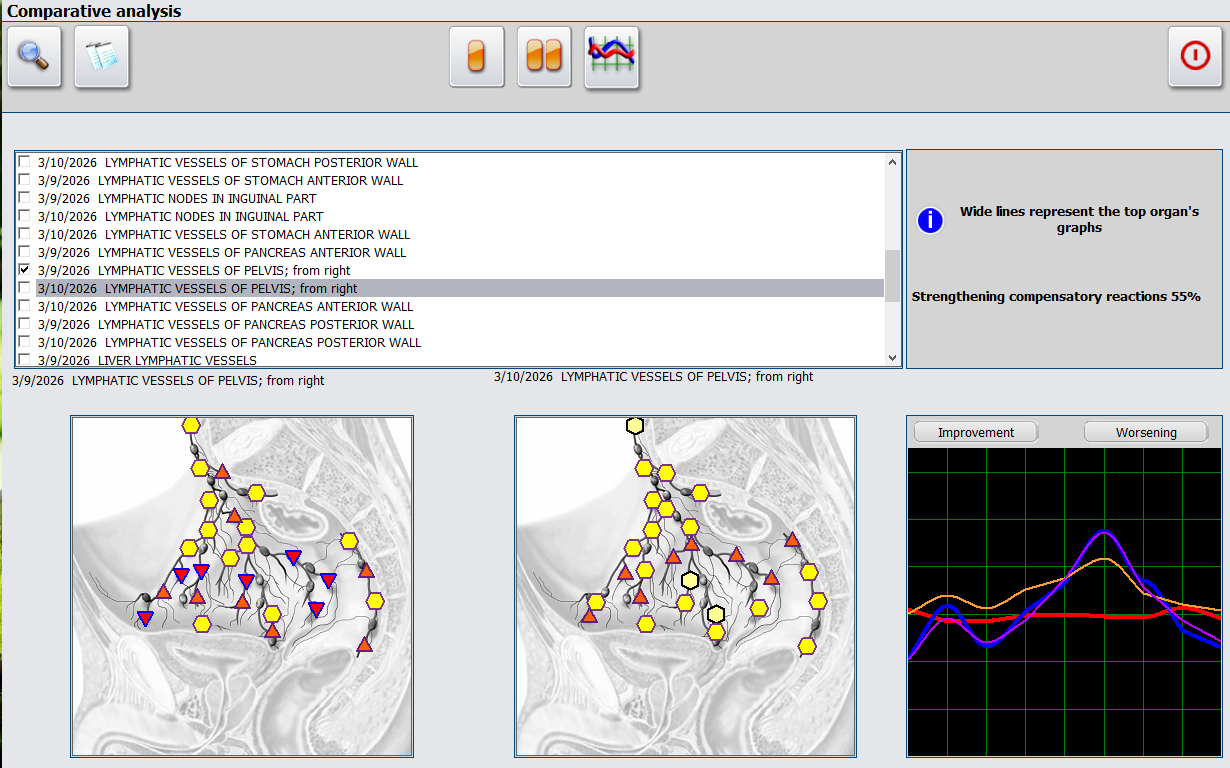
Very quick legend for the screenshots:
Yellow or pink hexagon – things look calm.
Orange triangle – working hard, upper end of normal.
Red triangle – early stress.
Brown diamond – medium problem.
Black square – biggest stress in that spot.
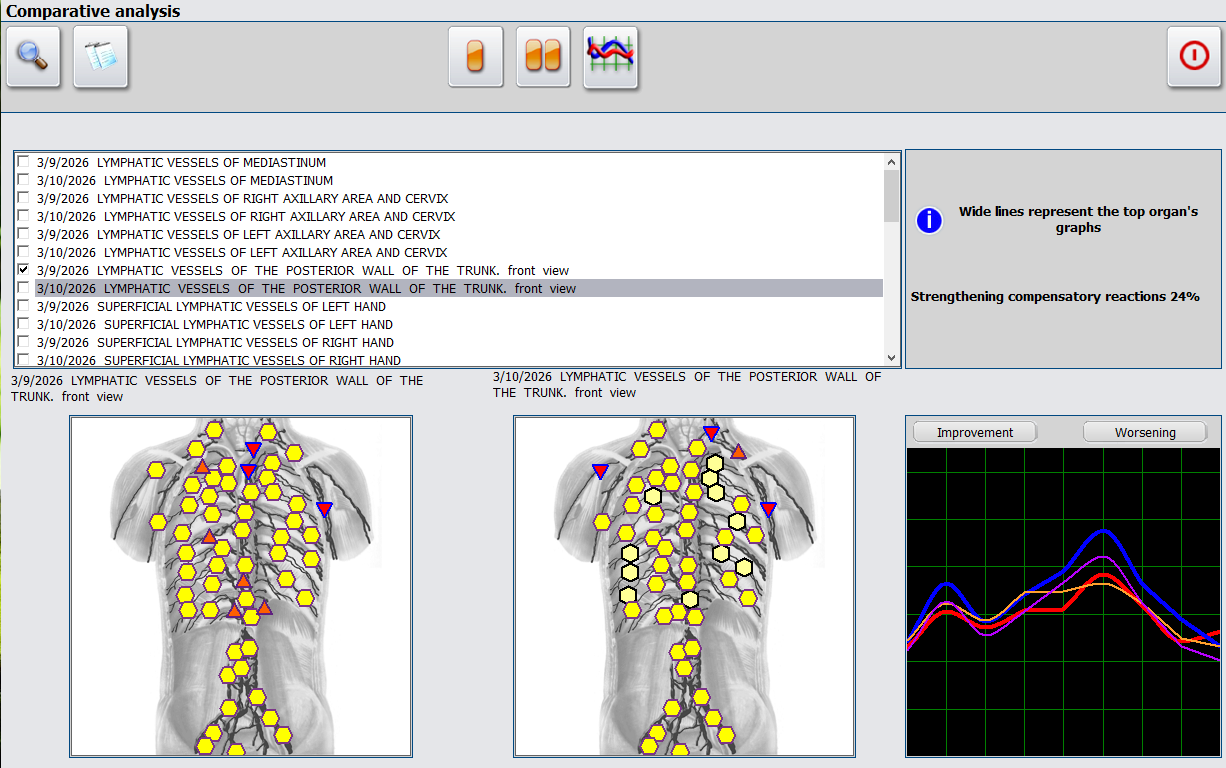
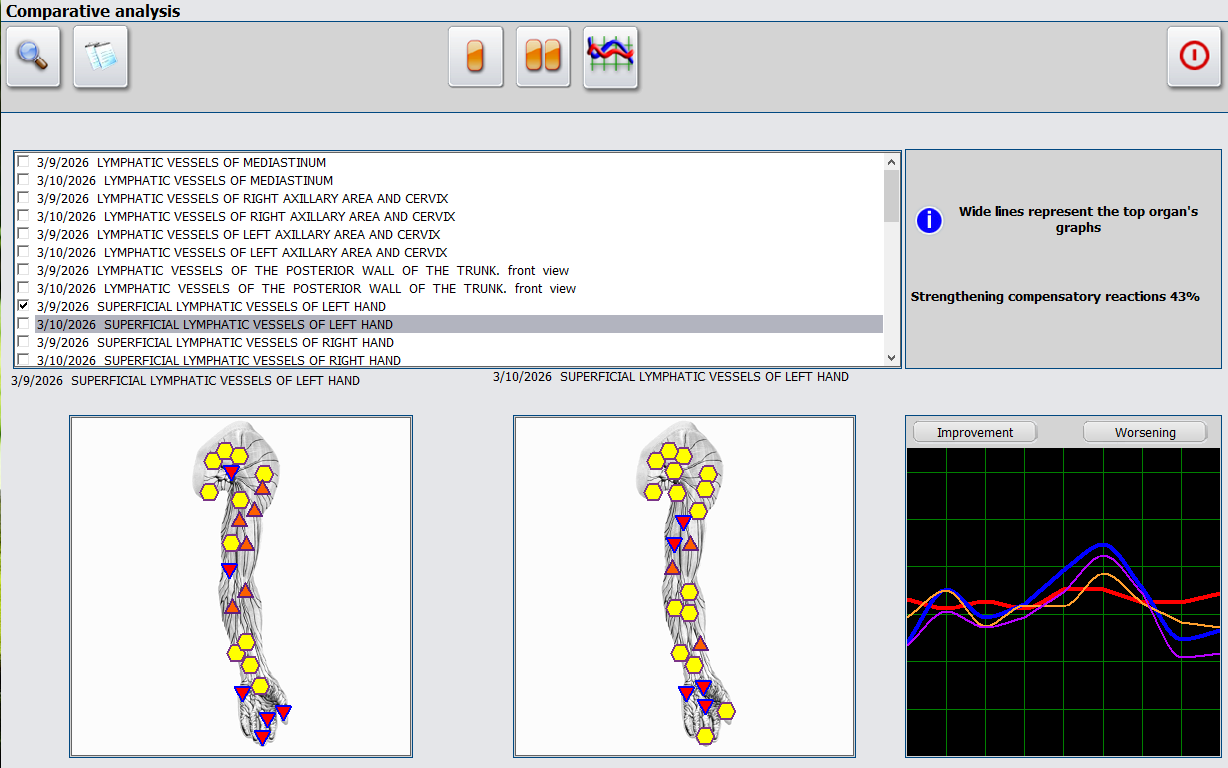
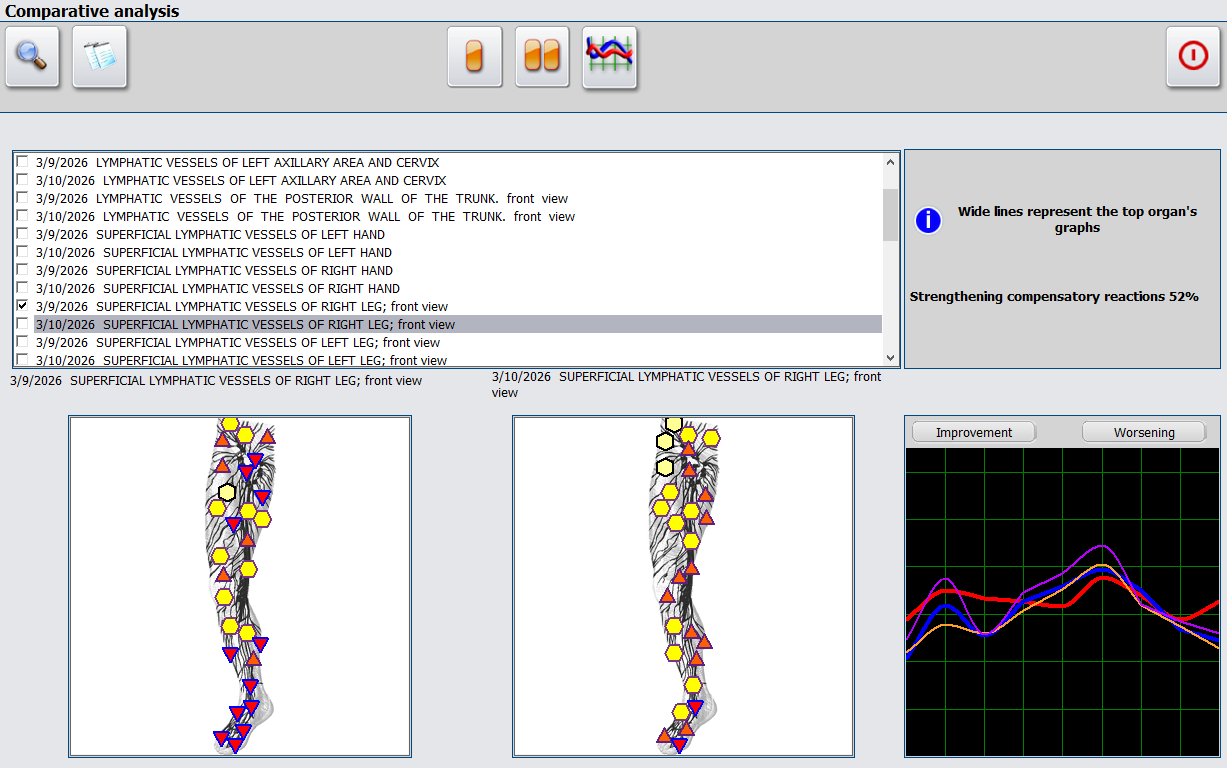
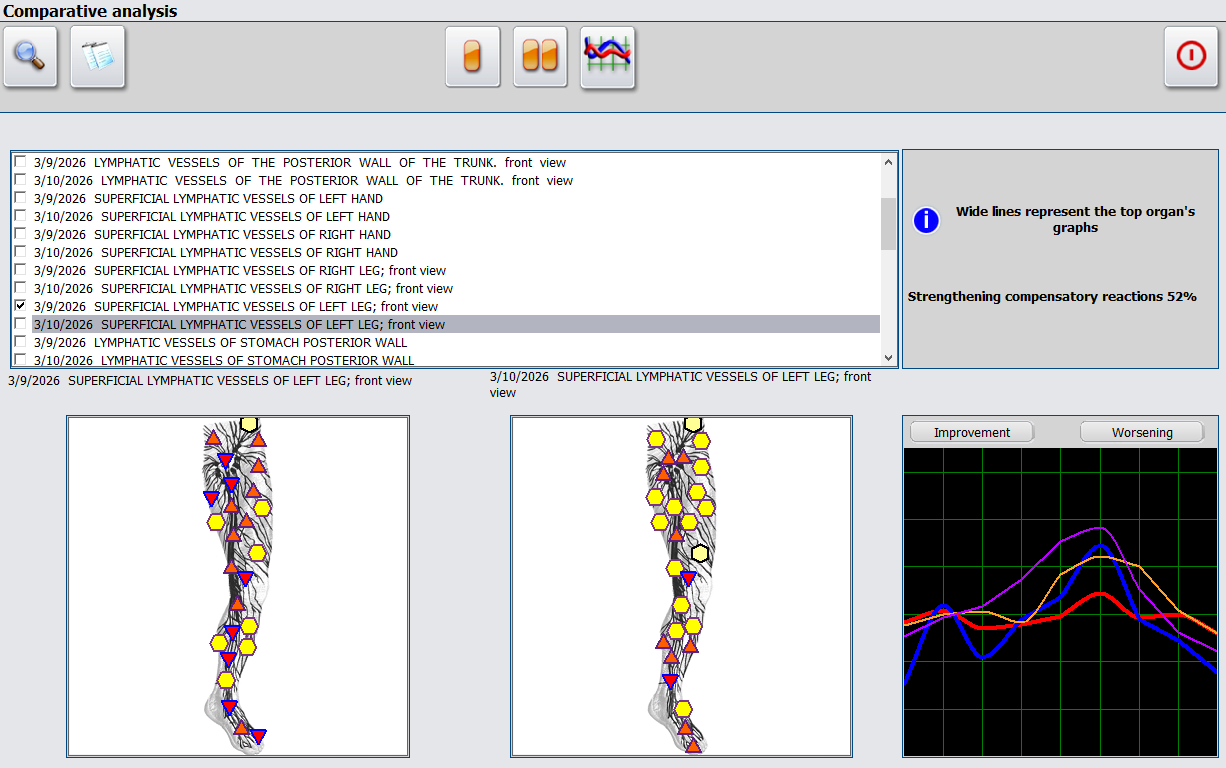
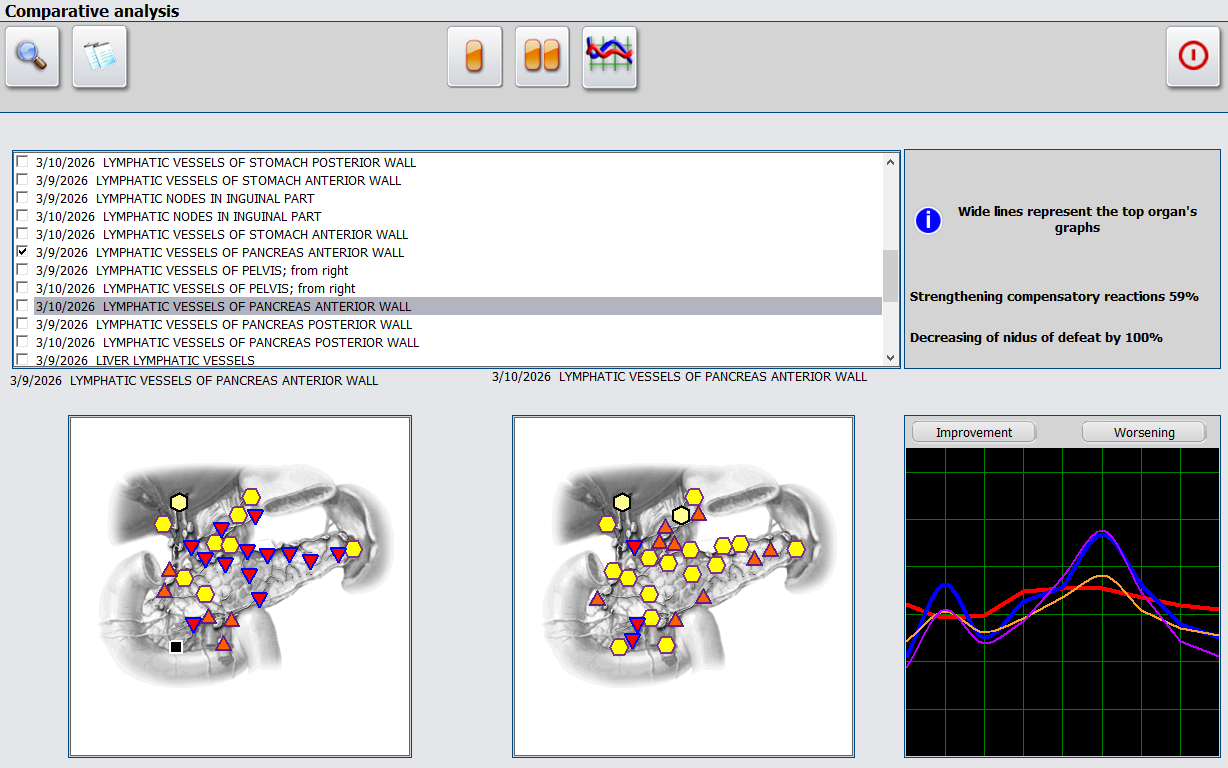
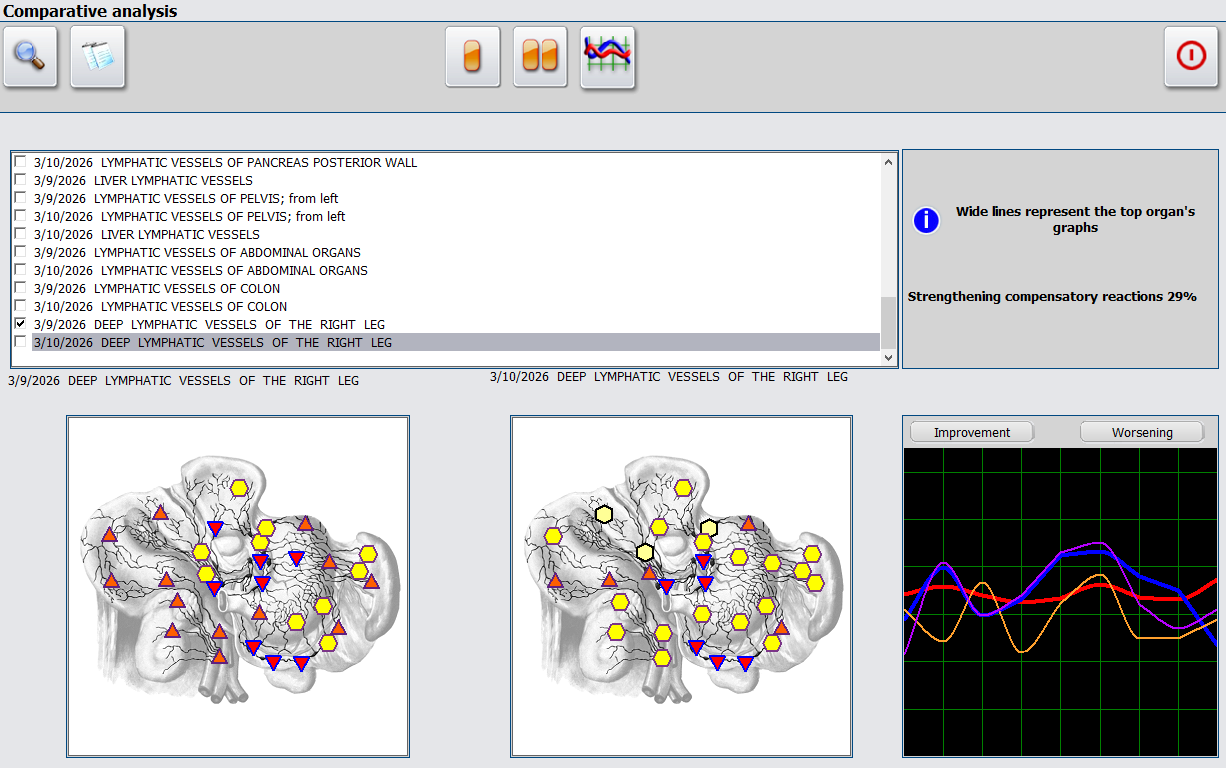
On the right side of each screenshot there’s a wavy line graph. When the lines are smoother and closer together, the system is more settled; when they spike and spread out, it’s more tense.
What I Did
I scanned every lymph‑related section Meta Hunter offers: hands, arms, legs, trunk, abdomen, chest, and internal organs. That’s what the 18 screenshots below show.
Then I did four rounds of 10–20 minutes of gentle rebounding on a mini‑trampoline spread out over 24 hours. No other new exercise or supplements.
Right after that, I repeated the exact same full lymph scan.
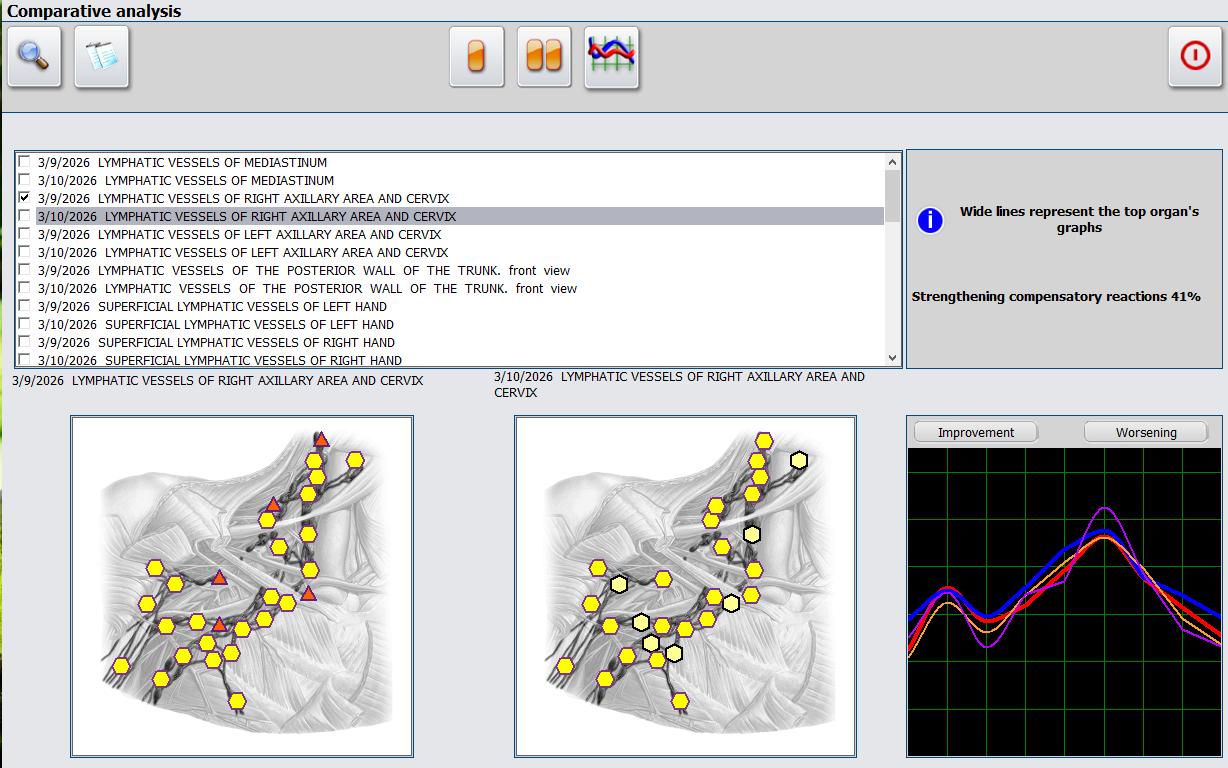
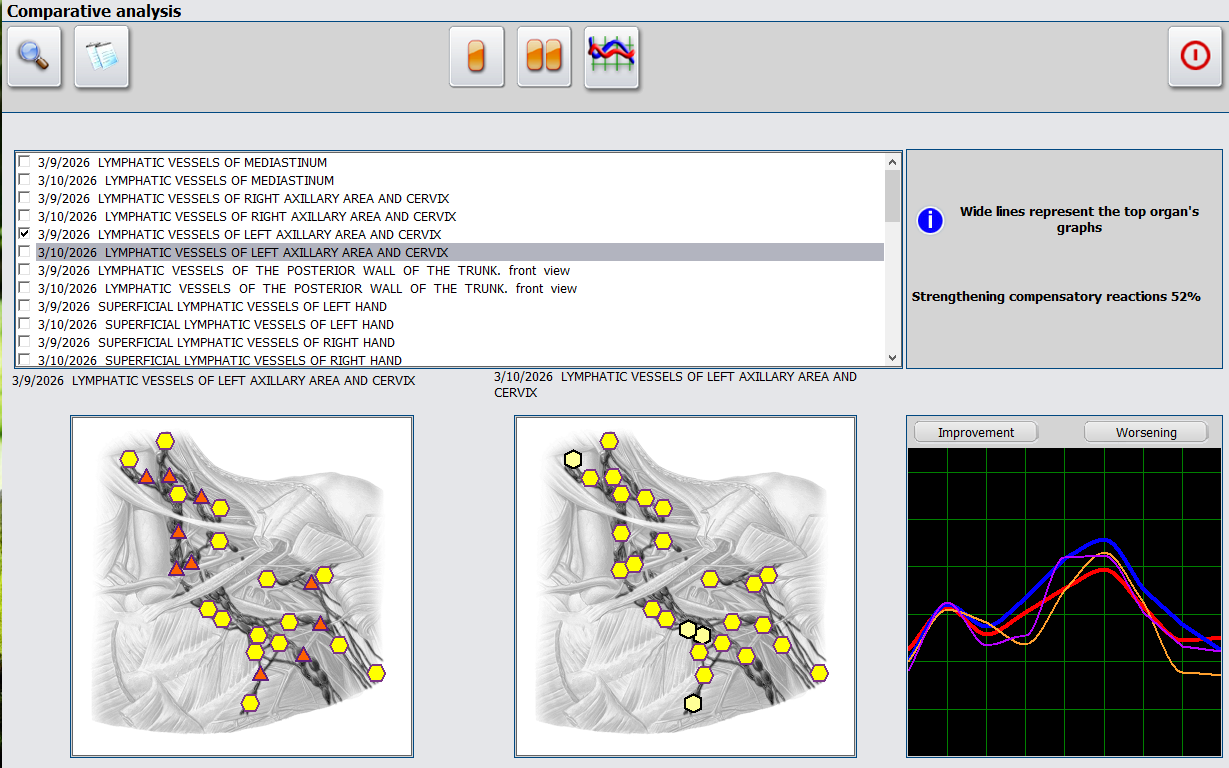
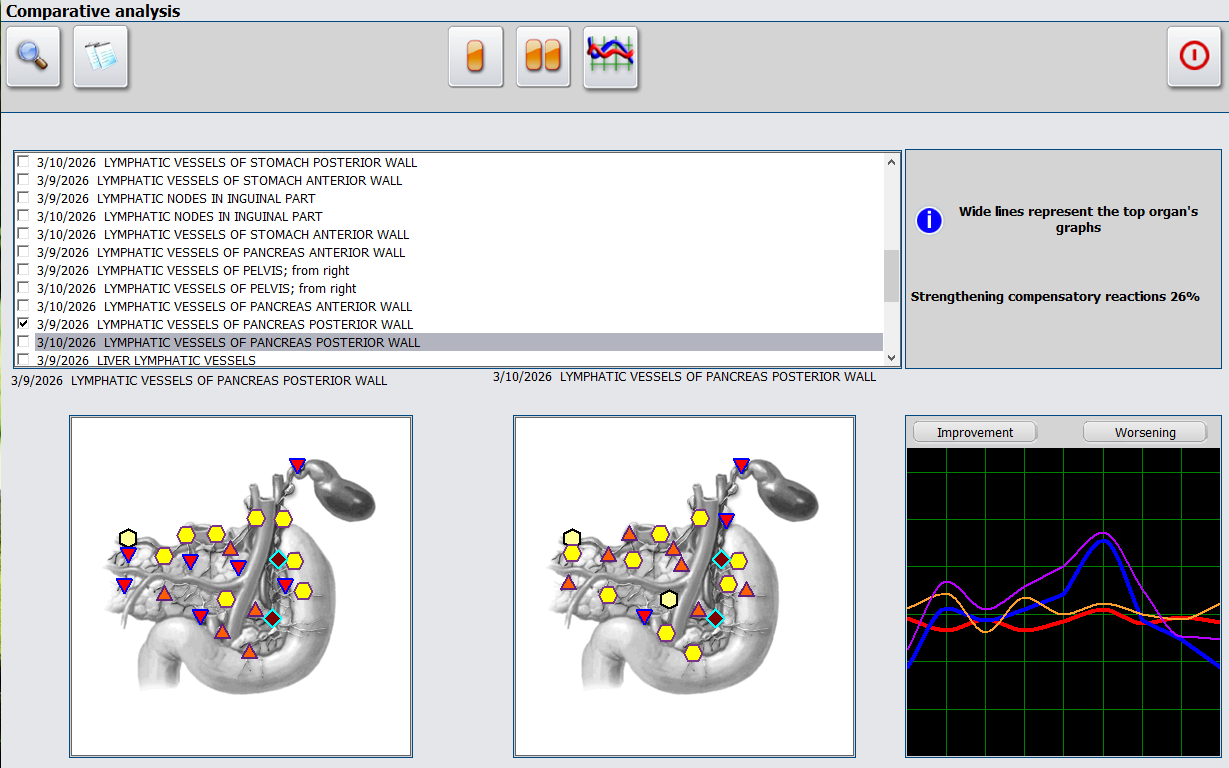
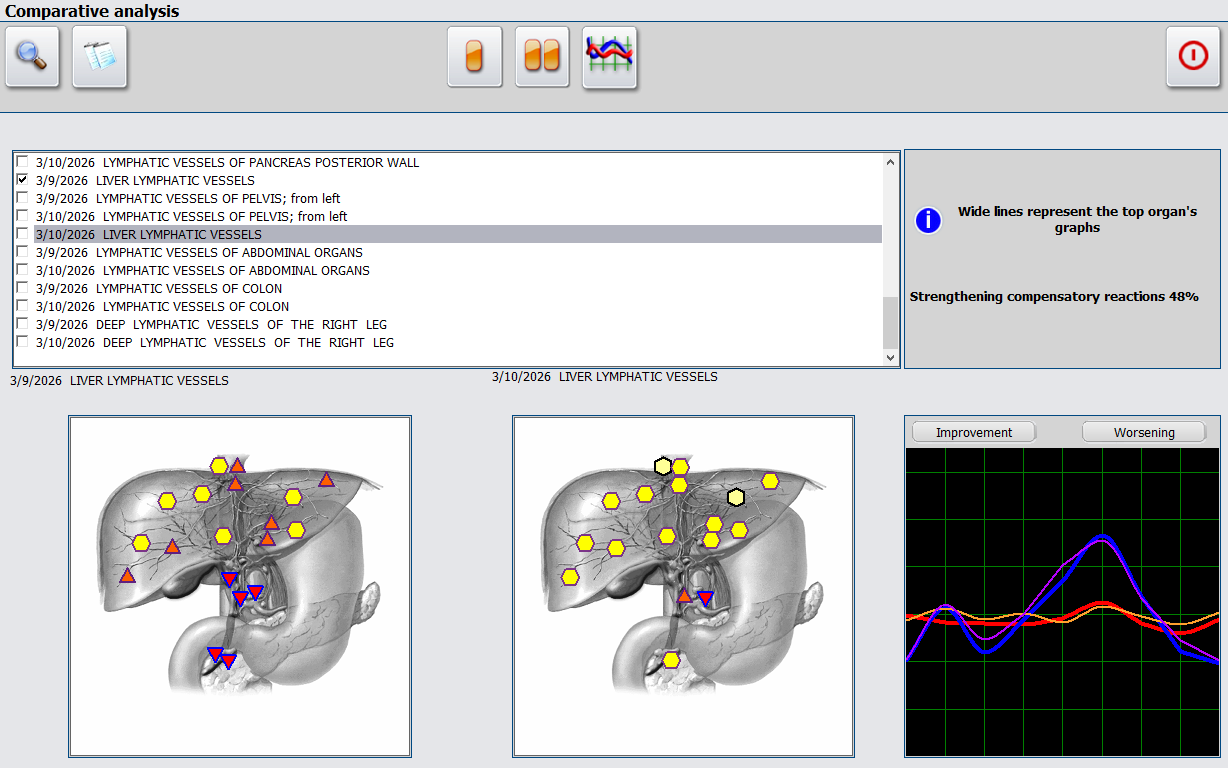
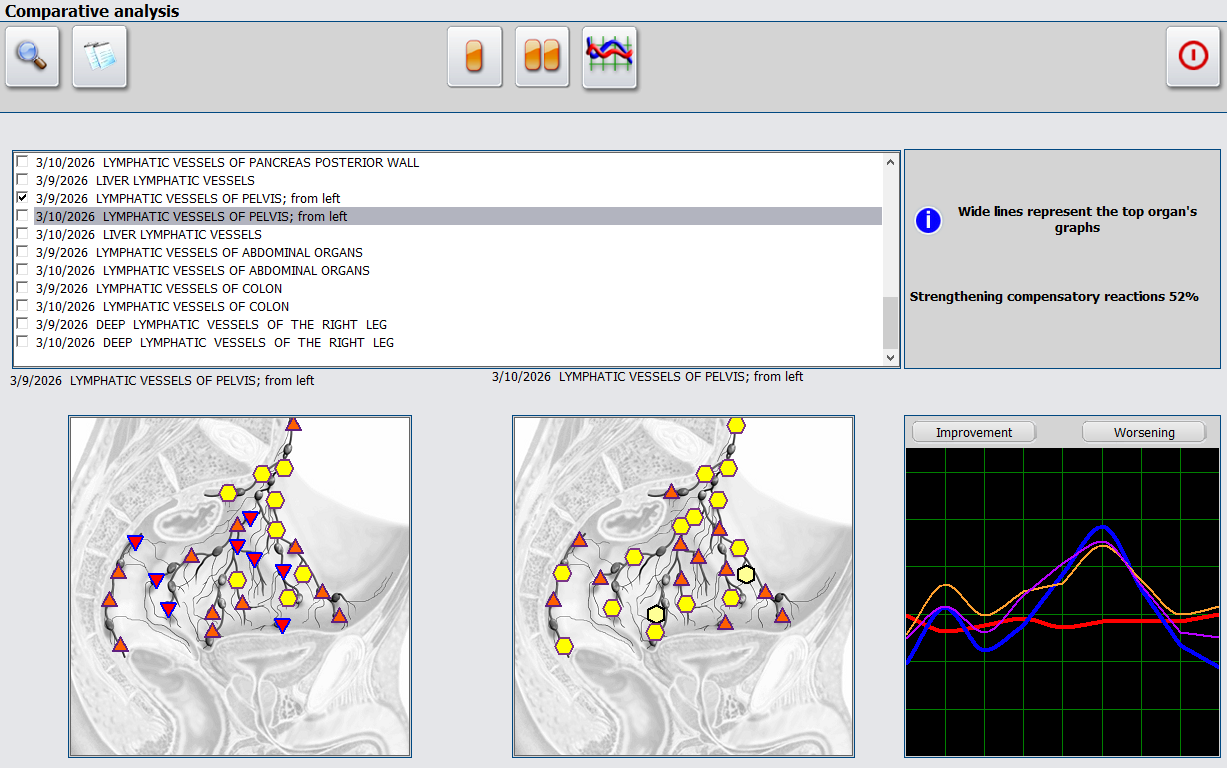
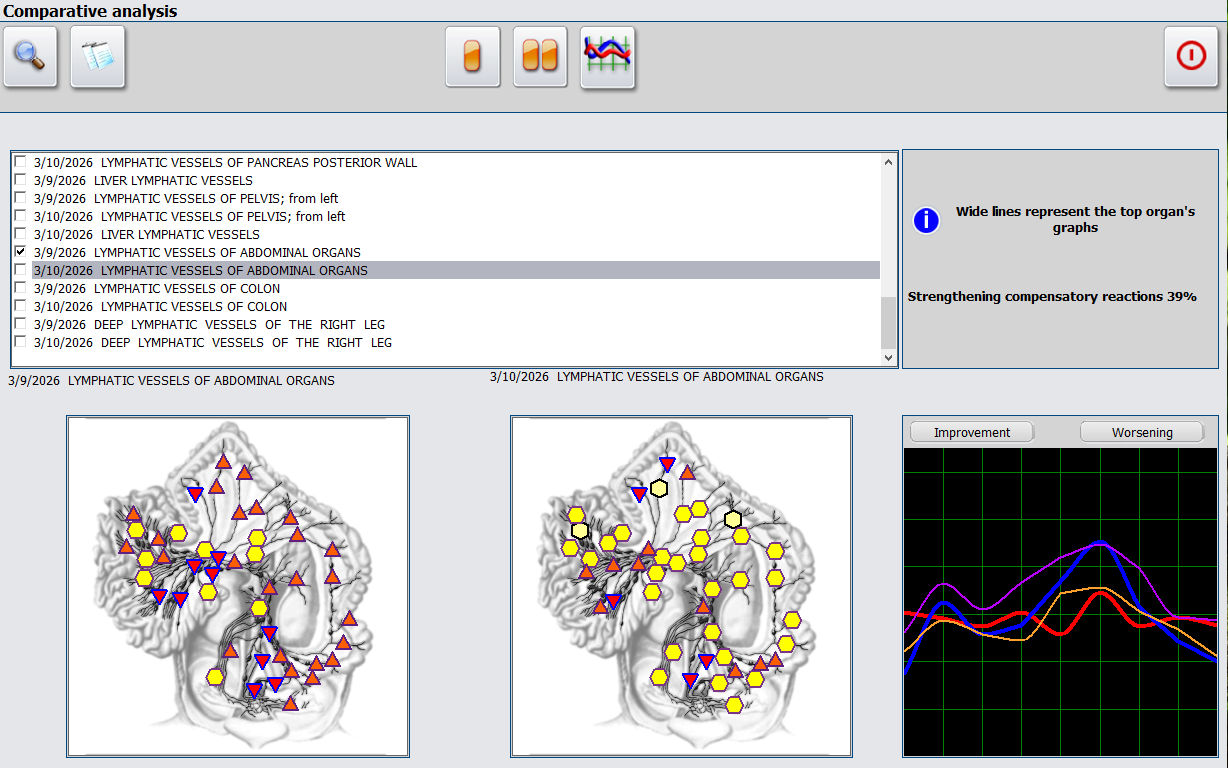
Here are the rest of the scans, quite comprehensive as far as I can tell. You’ll notice a decrease of darker icons from left to right. Note that the exact improvement is expressed as a number above the line graph on the right side of each image:
What Changed
Looking at the “before” and “after” images side by side:
Many areas that showed stress on the first scan had more yellow, pink, and orange icons after.
The line graphs on the right generally became less spiky and more grouped together, and the software’s “compensatory reaction” percentages in many regions moved down, meaning less overtime work for those areas.
For the number nerds, the average improvement was 40%. Interestingly, one of my more stressed out areas is my pancreas (aside from the lymph system), but after rebounding, that section of lymph nodes improved 59%. For the detailed observers, the pancreas scan was the only one that mentions “Decreasing of nidus of defeat by 100%” which basically means:
“Nidus” = the main trouble spot, the little focus where the problem was centered.
“Defeat” = damage or stress in that spot.
Translation: “The main problem spot that was there before is now gone on this scan.”
In plain language: on this particular day, with this particular body, my lymph pictures looked calmer and less stressed after rebounding than before. I’ve never seen this kind of improvement across all scans, to be honest. And I’ve got hundreds of scans at this point to choose from.
What I Took From It
This doesn’t prove anything for anyone else, and I’m not suggesting what anyone should do with their own health. It’s simply one very nerdy self‑experiment.
For me, running full‑body lymph scans before and after bouncing was enough to personally verify that rebounding wasn’t just a marketing slogan. On my screens (and in my body) something clearly shifted in the right direction.
What would you want to test on yourself? Food? Supplements? Health routine?
Support Crunchy Nation
If you want to help fund more real‑world MetaHunter testing and write‑ups like this, there are two simple ways to support the project:
Chip in once (any amount)
Make a one‑time contribution to keep the scans, analysis, and articles going:
👉 Support Crunchy Nation with a one‑time contributionBecome a monthly supporter
Join the small group of readers who cover ongoing scan time and data work each month:
👉 Become a monthly Crunchy Nation supporter
Future project‑level backers (coming soon)
Some readers have asked about fully funding an entire experiment (around $3,500+ for a focused MetaHunter study on one big question). I’m still dialing in the data pipeline before I open that up. If you’d like to be first in line when project‑level slots are available, join the private Project Backer list here: ➜ Yes, I want to back a Research Project
There’s so much to test!
Help spread the word by sharing this post on your favorite social media. Americans are sicker than ever, but something can be done about it.
Trevor
Chief Toxin Eliminator