


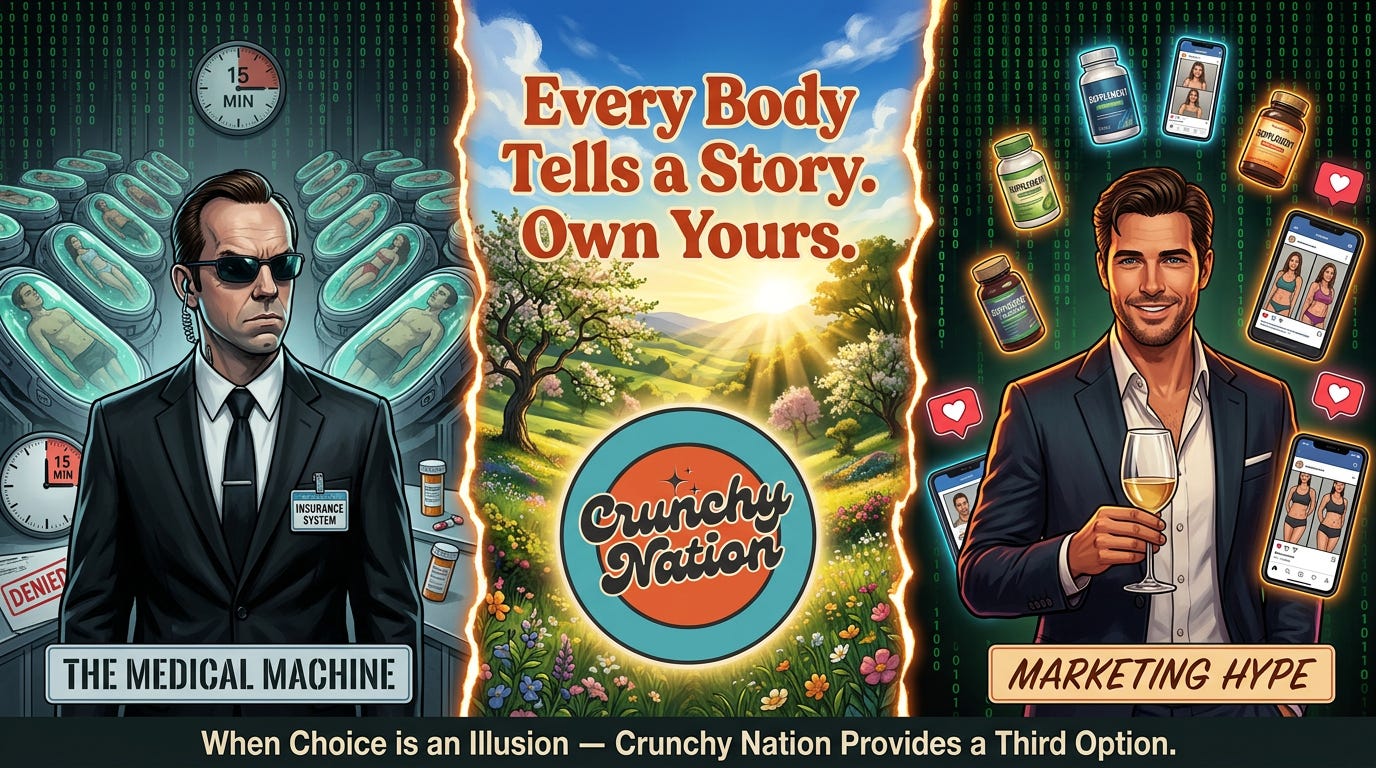
Something feels off. You can’t quite name it — fatigue, a gut that won’t cooperate, a sense your body is trying to tell you something nobody is hearing.
So you try the two options the health industry hands you.
Option One: The Medical Establishment
You get 15 minutes. Maybe a blood panel. A prescription. A referral that takes six weeks. Then a bill that makes no sense.
The system isn’t broken because doctors are bad. It’s broken because of how money flows through it. Fee-for-service medicine pays providers per procedure, not per outcome — it literally rewards volume over results. Health insurers posted a combined $71.3 billion in profits in 2024 while 1 in 3 GoFundMe campaigns now exists to cover someone’s medical bills.
The seven largest publicly traded insurers collectively paid $146 million to their CEOs that same year.
Prior authorization — the process where insurers approve or deny the care your doctor recommended — denied 7.7% of all requests in 2024. When patients appealed those denials, more than 80% were overturned. Meaning the majority of denials were wrong — and most people never appealed.
This is managed illness. Not because anyone planned it that way. Because the incentives evolved to point there.
Option Two: The Wellness Industry
The wellness world is ready for you when the medical system fails.
Supplements. Protocols. Influencers with morning routines and follower counts in the millions. Each one backed by a study, or someone who seems like they’ve read one.
Here’s what doesn’t get said: none of it was tested against your body specifically.
The supplement industry generates nearly $70 billion annually in the U.S. — with no requirement to prove a product works for any specific person before it’s sold. The FTC has filed more than 120 cases challenging false health claims made for supplements.
The wellness industry didn’t set out to mislead you. It evolved into a marketplace where making a health claim costs nothing, and testing that claim against your specific biology is optional.
Choice is an illusion when both options start with someone else’s financial interest instead of your actual data.
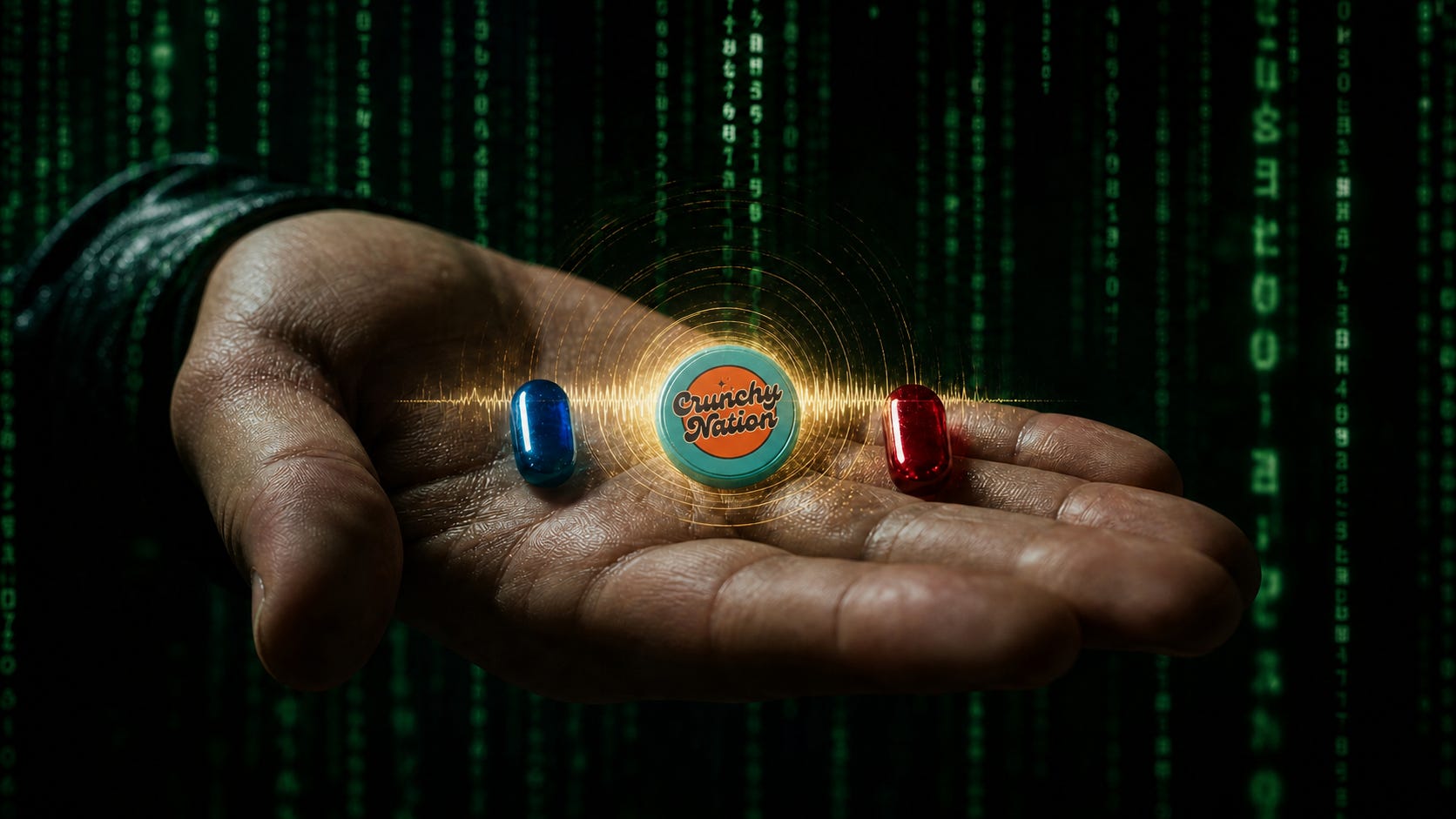
The Third Option Nobody Told You About
What if you started with your own body’s data?
Not a population average. Not a 15-minute snapshot. Not a supplement protocol engineered for someone who shares your demographic but not your biology.
A bioresonance scan is simple: sensors read the signals your body is already producing, and the data is translated into a plain-English report showing which systems had the strongest signal activity during that session. No needles. No waiting rooms. No lab codes to decode three weeks later. You walk in, sit down, and walk out with a report you can actually read — and something concrete to bring into any health conversation you choose to have.
No diagnosis. No prescription. No upsell based on what it finds.
It’s the information layer that should exist before any health decision gets made. Something you could bring to your doctor to make those 15 minutes actually start somewhere useful. Something you could use to ask better questions before you spend three months on a supplement protocol that was never tested against your body.
Half of U.S. adults under 50 now get health information from social media influencers — because they’ve run out of better options. The demand for trustworthy, personalized health intelligence is enormous. The supply is nearly zero.
Why This Is Bigger Than One Person’s Data
Here’s what nobody in health tech is talking about.
When one person gets a scan, they get their own signal picture. When a thousand people get scans — and that data is aggregated anonymously across age, geography, and reported health history — something else becomes possible entirely.
Patterns that no doctor’s office, no insurance company, and no supplement brand has any incentive to find.
Imagine being able to look across a thousand people who share a common health concern and ask: what are they all eating? What supplements are they all taking? What medications appear in nearly every profile? That kind of population-level signal doesn’t exist anywhere right now — because the systems that hold health data are built to bill, not to learn.
Crunchy Nation is building that dataset — funded by people, not by insurance companies or supplement brands with a financial interest in what the scans find.
When a community member gets a scan, they’re not just getting their own picture. They’re contributing to a growing body of real-world health intelligence that could reveal what no clinical trial was ever designed to find — because clinical trials are funded by people with a product to sell.
“The medical system, through no fault of its own, often has to cast a wide net. A friend of mine recently ended up with $13,000 in tests after feeling ‘off,’ with nothing conclusive to show for it. This scan changed that equation for me.”
— Hans, Crunchy Nation member
Why This Is a Movement
When you get a scan, you’re not just getting your own data. You’re casting a vote for a health system that starts with your biology, not your billing code.
If you felt something reading this — follow along.
Crunchy Nation publishes here on Substack: what the scans are finding across the community, what the research actually says, and what whole-body health intelligence looks like when it starts with real data instead of the system’s assumptions.
No supplements to sell. No funnels. Just the third option — and the first dataset of its kind.
Crunchy Nation is a health intelligence platform, not a medical service. Scans are observational, not diagnostic. Consult your physician or preferred health professional regarding any health decisions.