


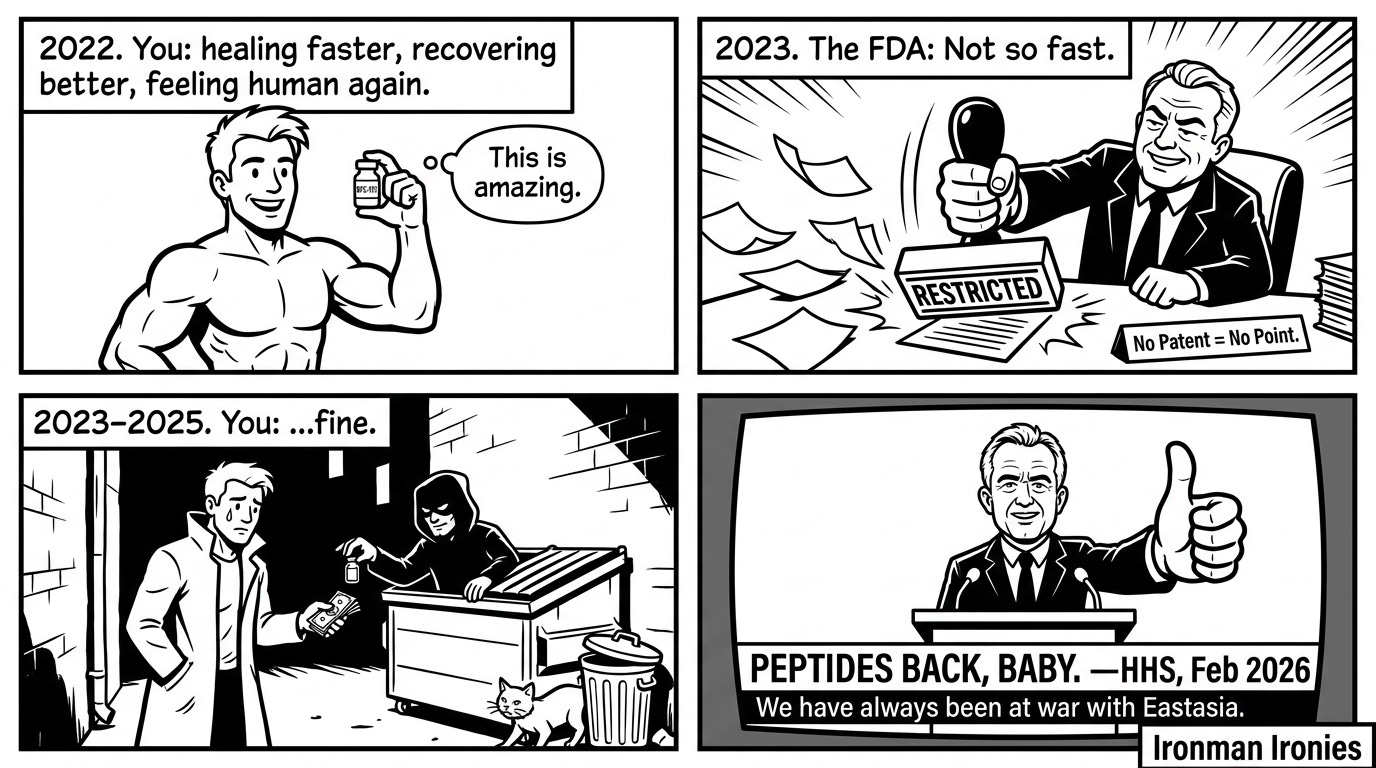
If you used BPC-157, TB-500, thymosin alpha-1, ipamorelin, or similar peptides — and then suddenly couldn’t get them anymore — you already know this story from the inside.
In 2023, the FDA placed 19 widely used peptides on its restricted Category 2 list. That meant licensed compounding pharmacies could no longer prepare them, even for patients using them under medical supervision. Overnight, people who relied on these therapies for recovery, immune support, gut healing, and injury repair were cut off — or pushed toward sketchier gray-market alternatives.
The official explanation was safety and lack of evidence.
But here’s the pattern people noticed: these were peptides your body already makes naturally. They couldn’t be patented. No pharmaceutical company could own them. No big company had a billion-dollar incentive to defend them. So they became easy to restrict.
Then on February 27, 2026, HHS Secretary Robert F. Kennedy Jr. announced that approximately 14 of those 19 peptides would move back to Category 1, restoring legal compounding access through licensed pharmacies with a physician’s prescription.
That includes names many people had been waiting years to hear again: BPC-157, TB-500, thymosin alpha-1, CJC-1295, ipamorelin, GHK-Cu, and others.
Whether you see that as a win for patients, a warning about regulatory overreach, or both, one thing is clear: the fight over peptides was never just about peptides. It was about who gets access to health tools when those tools don’t fit the usual pharmaceutical business model.
This is one of the clearest windows into how health decisions get shaped long before most people ever hear about them.
📖 READ THE FULL STORY
More Miracles — Coffee & Covid, Monday April 6, 2026

If the peptide story caught your attention, read the full article. It connects this fight to a much bigger pattern playing out across medicine right now.
And if you want more research, signal, and real data to help you think clearly about health decisions — not more marketing hype dressed up as certainty — subscribe to Crunchy Nation.