


Once upon a time, on an island a stone’s throw away from Miami, a boy grew up listening to experts and corporations who claimed to know what was best for his health.
Fast forward 40 years. That boy (now a man) discovered he had five “forever chemicals” (PFAS) in his blood despite eating clean, avoiding Teflon, and doing everything the “experts” said was healthy.
That was me. And that discovery sent me down a rabbit hole I’m still climbing out of.
When Water Testing Wasn’t Enough
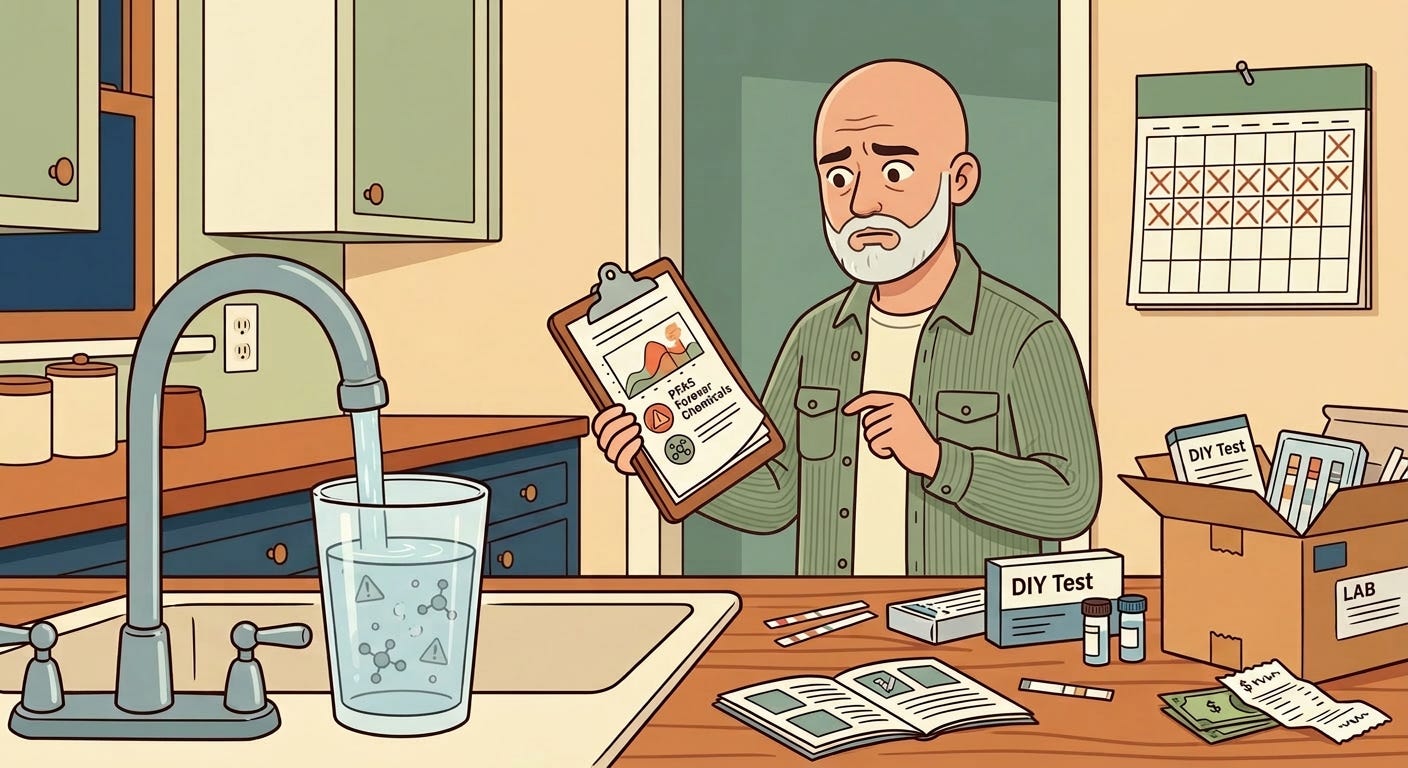
After finding forever chemicals in my blood, I started testing my tap water. I bought DIY kits. I sent samples to labs. I waited weeks for results and spent plenty of dough.
And you know what I learned?
Without expensive laboratory testing, I couldn’t really prove if my home water filter was doing its job. DIY tests were inconclusive, lab tests were slow and costly. And I had a bigger question nagging at me:
If my water has toxins, what about everything else I’m putting in my body?
I was taking 14 different supplements every single day:
9 supplements prescribed by a kinesiology expert.
5 more I added myself from Facebook ads, YouTube videos, and friends’ recommendations
I was spending money on supplements but forced to just trust the marketing hype and experts. Not that I’m bitter. (Maybe a little)
But here’s the problem: I’m not that in tune with my body.
Unless I’m cramping from low salt or something dramatic, I don’t always “feel” when a supplement kicks in. I can’t tell if my Omega-3s are helping my heart or my Ashwagandha is calming my adrenals. I just... take them. Every day. Hoping they work.
But I had no idea if they were actually working.
The Search For an In-Home Lab
I needed a way to objectively test everything—water, supplements, food, personal care products—without waiting weeks for labs or spending thousands.
A health professional (and personal friend) in Sweden had mentioned MetaHunter to me a couple of years ago. She used it to test patients to find areas of concern so she could address them.
It’s a bioresonance scanning system that tests how your body reacts to specific substances in real time. It measures “compensation reactions”—whether something strengthens or weakens your organs. The numbers are objective:
Positive numbers = strengthening (good)
Negative numbers = weakening (bad)
I spent months researching which system to buy. Then I made a major investment and spent over 100 hours learning how to use it properly.
Testing Others First
Before I looked at my own results, I tested other people. Each person got a full scan. I was developing a methodology, learning the system, figuring out what the data meant.
And then, months after scanning myself, I finally sat down to look at my own results. Well, at least SOME of the results. We are talking 100’s of tests at this point. I had to pick something specific or we’d be here for a week.
Here’s what I discovered.
Testing My Supplement Cocktail
Remember those 14 supplements I was taking every day? The ones from my doctor and from Facebook? I tested them all together as a “daily vitamin cocktail.”
Here’s what MetaHunter found:
My Doctor Said These Organs Had Problems:
My doctor identified seven problem areas through kinesiology:
Thyroid
Adrenals
Brain
Prostate
Heart
Pancreas
Kidneys
He suggested nine specific supplements to strengthen them, so I threw them all together (along with a few other supplements I also took every day) and labeled it “Daily Vitamin Cocktail.” Using MetaHunter, I scanned many organs and body systems (not just the list above, but including those) to get the “Before” scans, and then scanned my daily vitamin cocktail against the organ scans.
At the point where I did the scans, it was really the “Monthly Vitamin Cocktail” as I had very poor form when it came to taking my vitamins every day. What can I say. For testing purposes, it was great, as I didn’t already have a fresh batch of daily vitamins in my system.
NOTE: In the scans below, a term is used, “VegetoTest.” VegetoTest is like a “try‑out” test that lets the machine see how a medicine might work on your body before you actually take it.
Simple meaning
VegetoTest uses a special cup (resonance chamber) where you place a pill, drops, or other remedy so the device can “listen” to its energy pattern or frequency. The machine then compares that medicine’s frequency with the “energy picture” of one of your organs to see if they match well or badly.
What it’s used for
It helps pick which vitamins, herbs, or medicines are most “in tune” with your body, so they are more likely to help instead of bother you.
It can test things that are already in the computer list or new things you bring (like a bottle from home) by putting them in the cup and running the test.
The computer looks at your organ’s “energy picture” before and after it “tries” a medicine or treatment.
It then gives a + or - number that shows the change in your body’s compensatory reactions – that just means how well your body is coping or balancing itself.
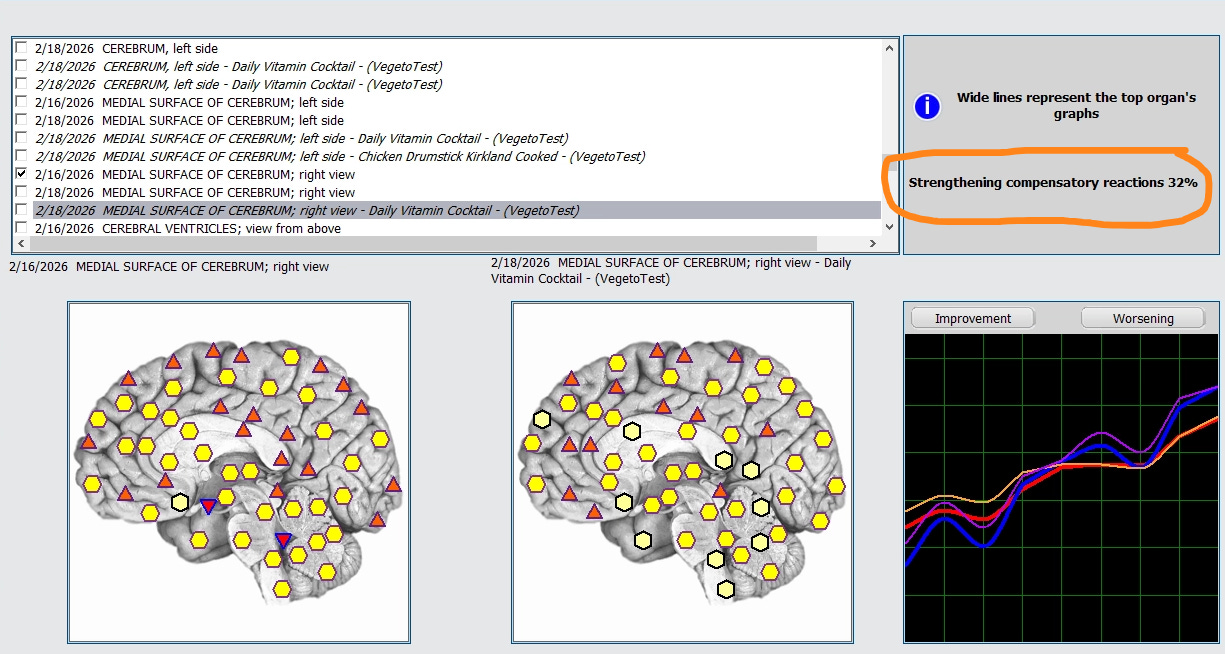
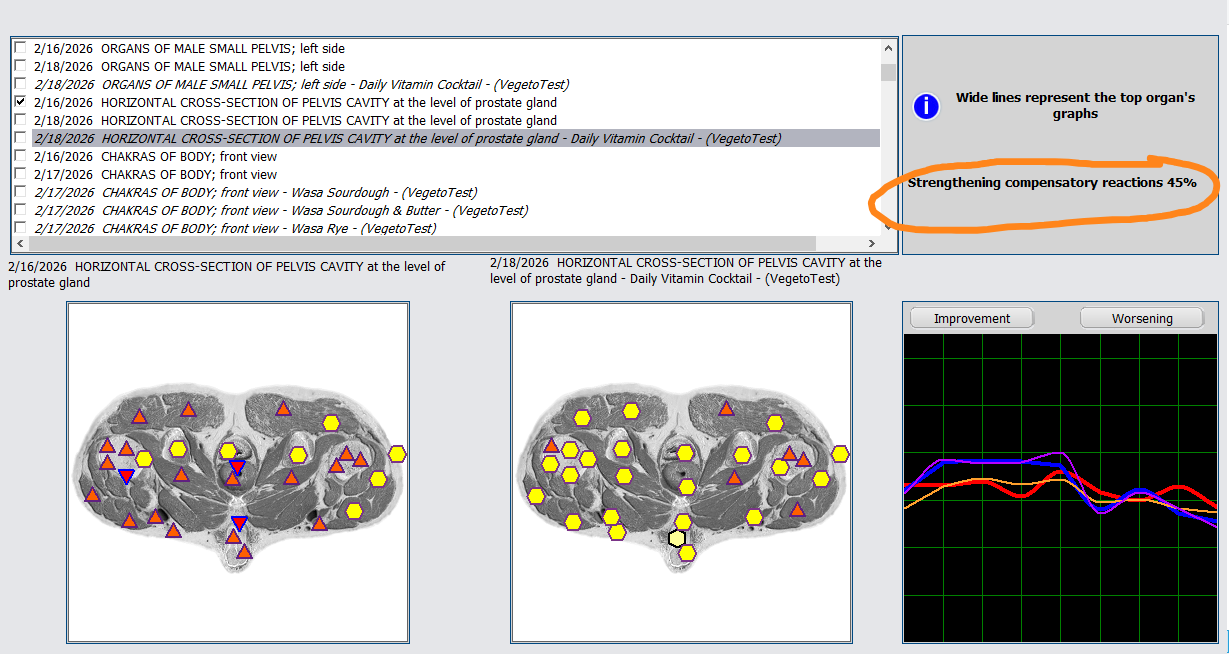
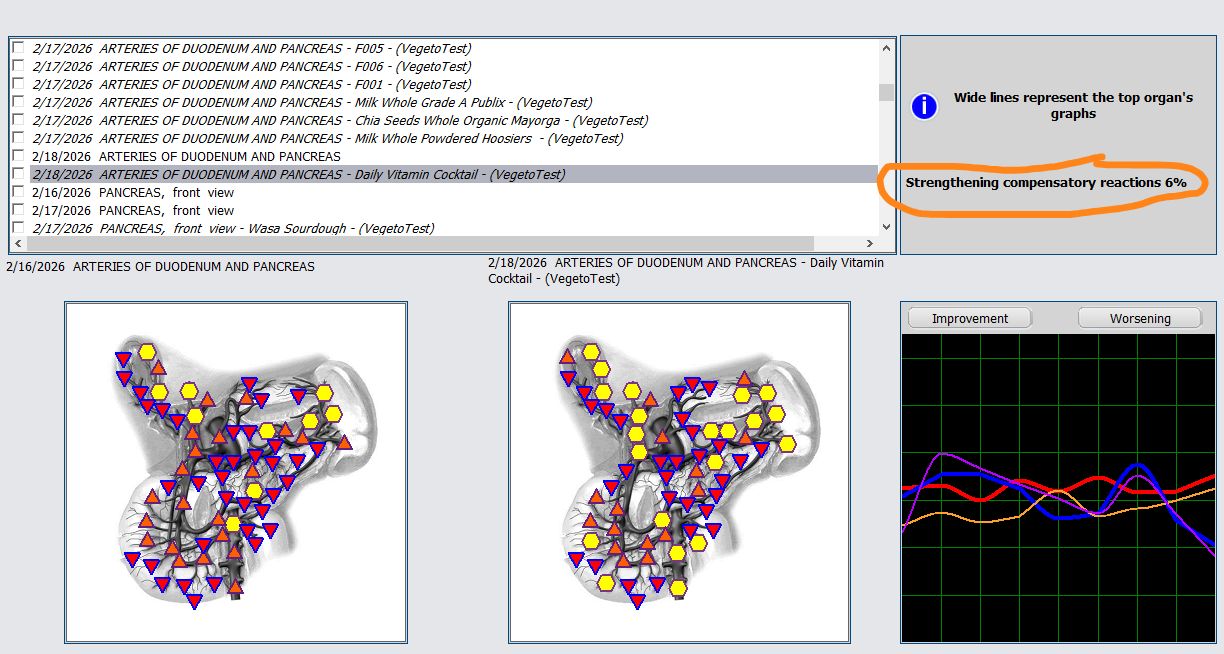
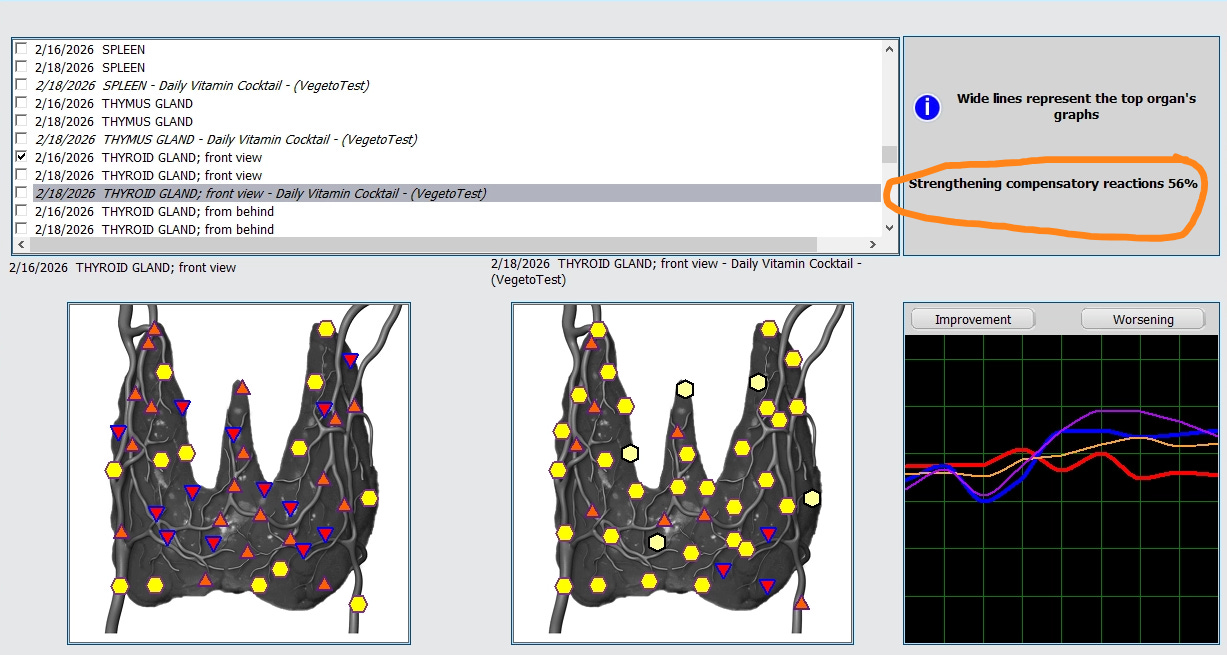
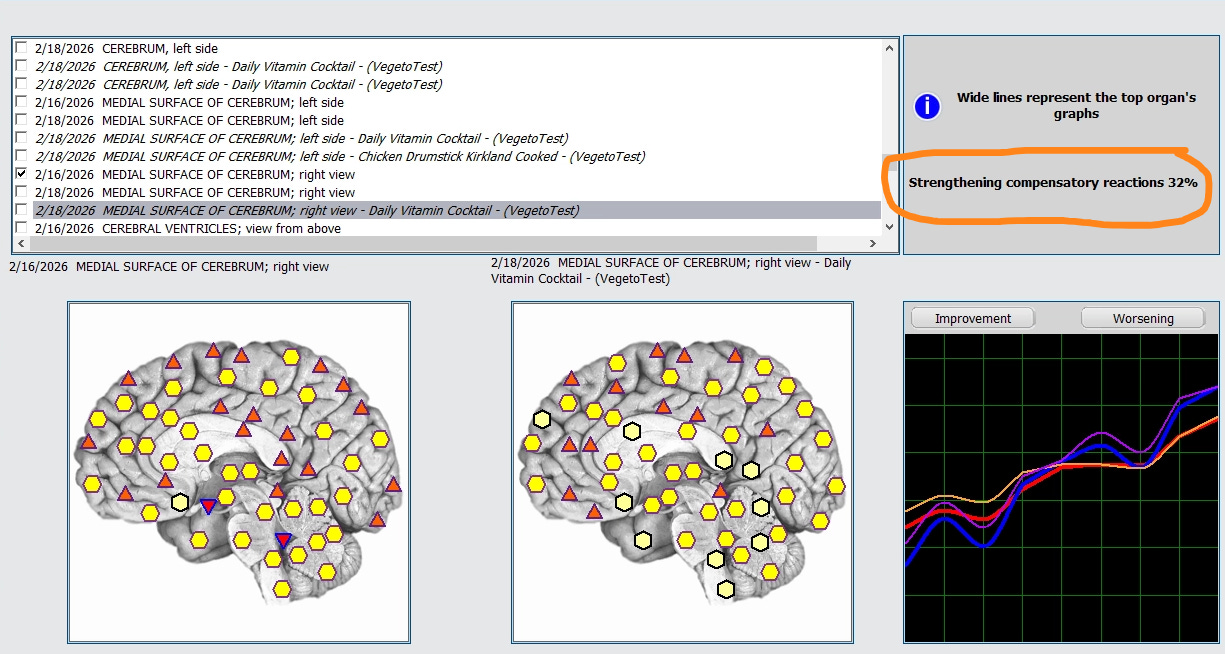
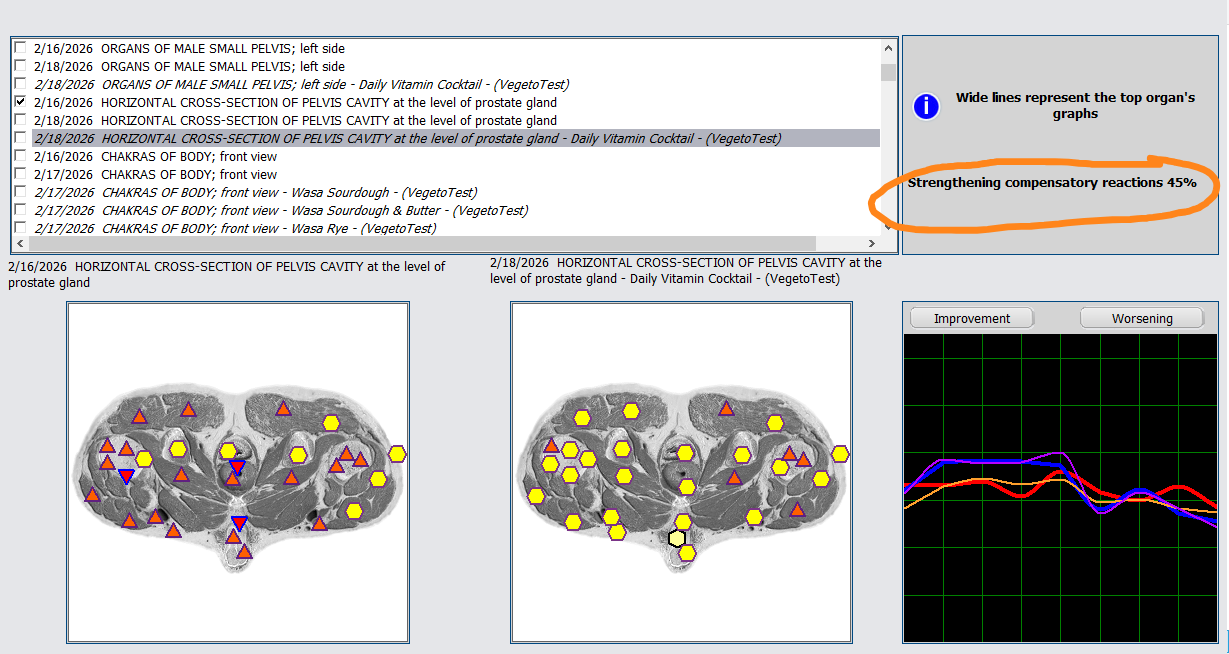
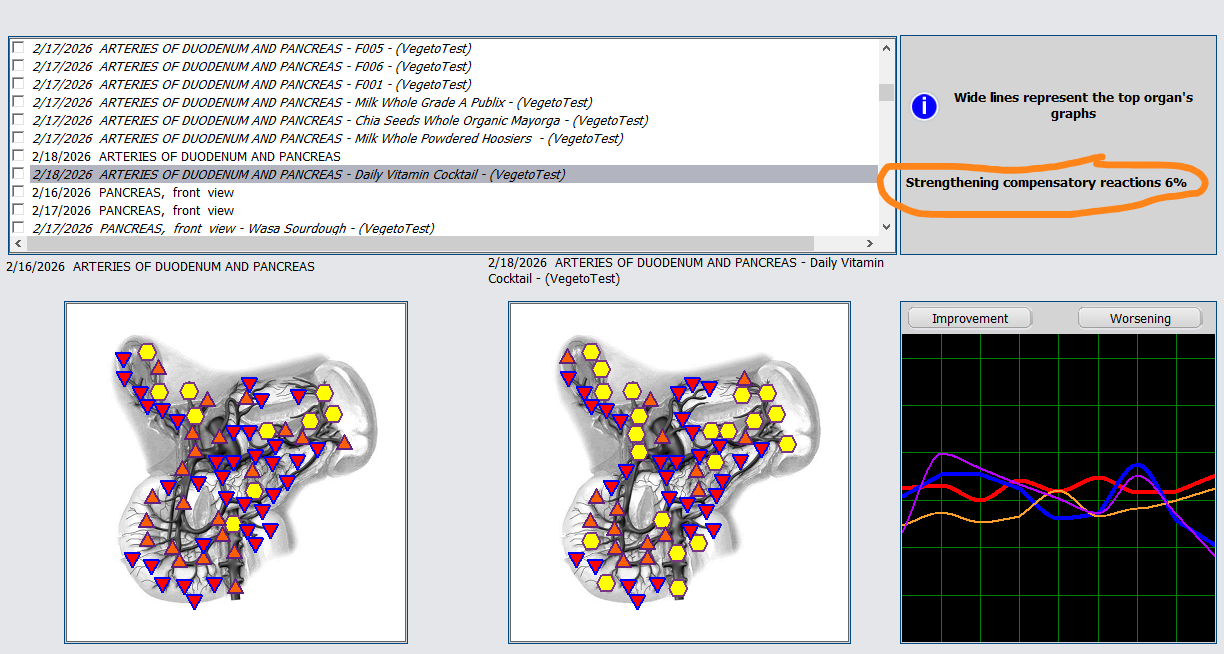
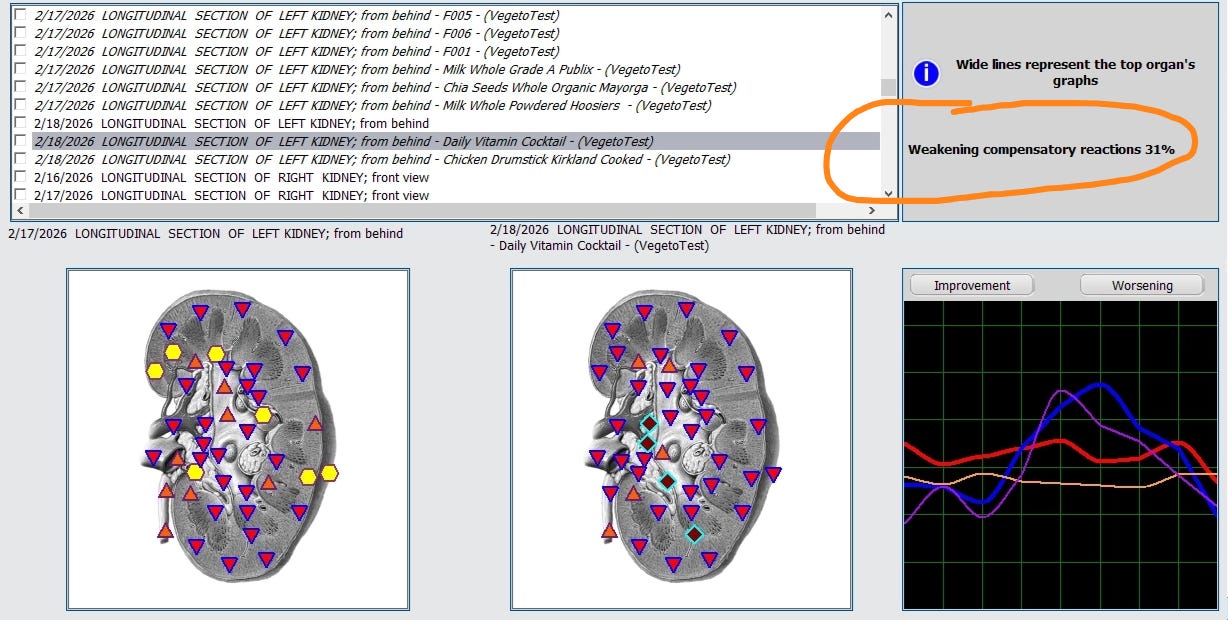
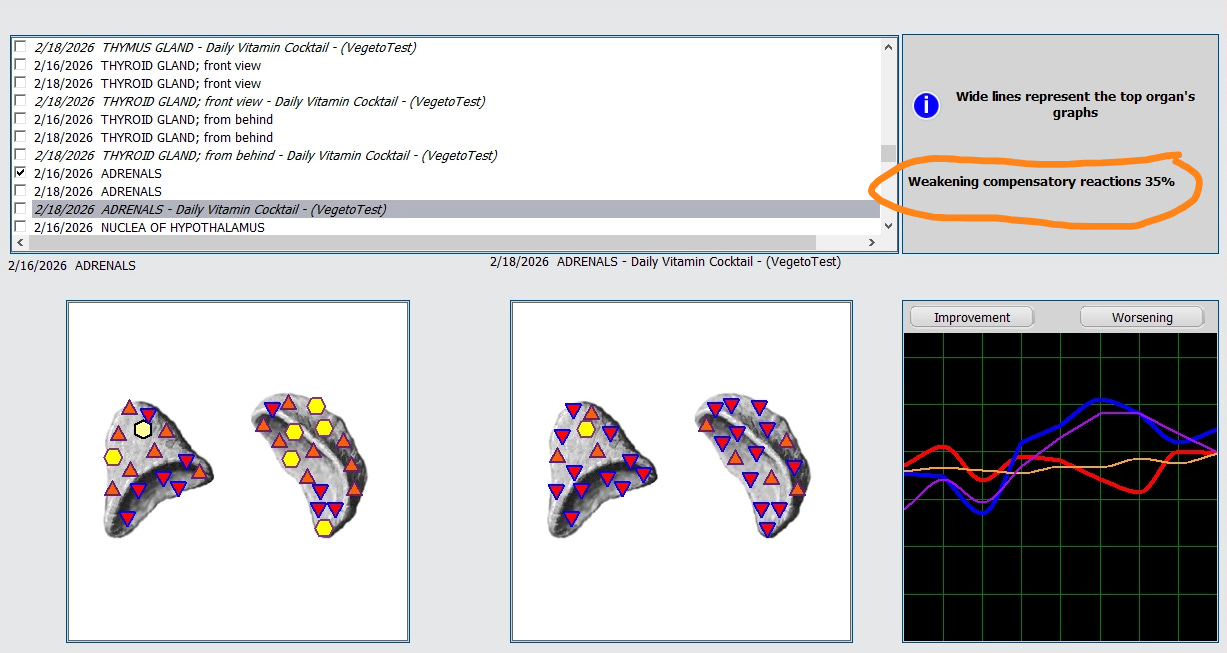
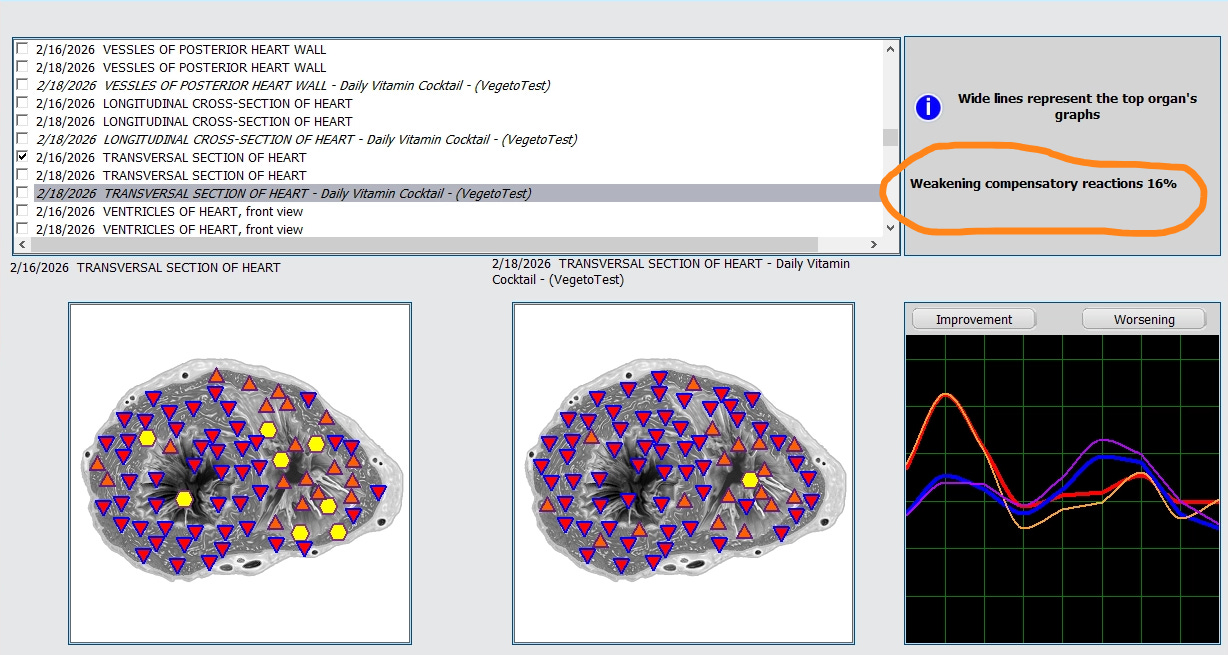
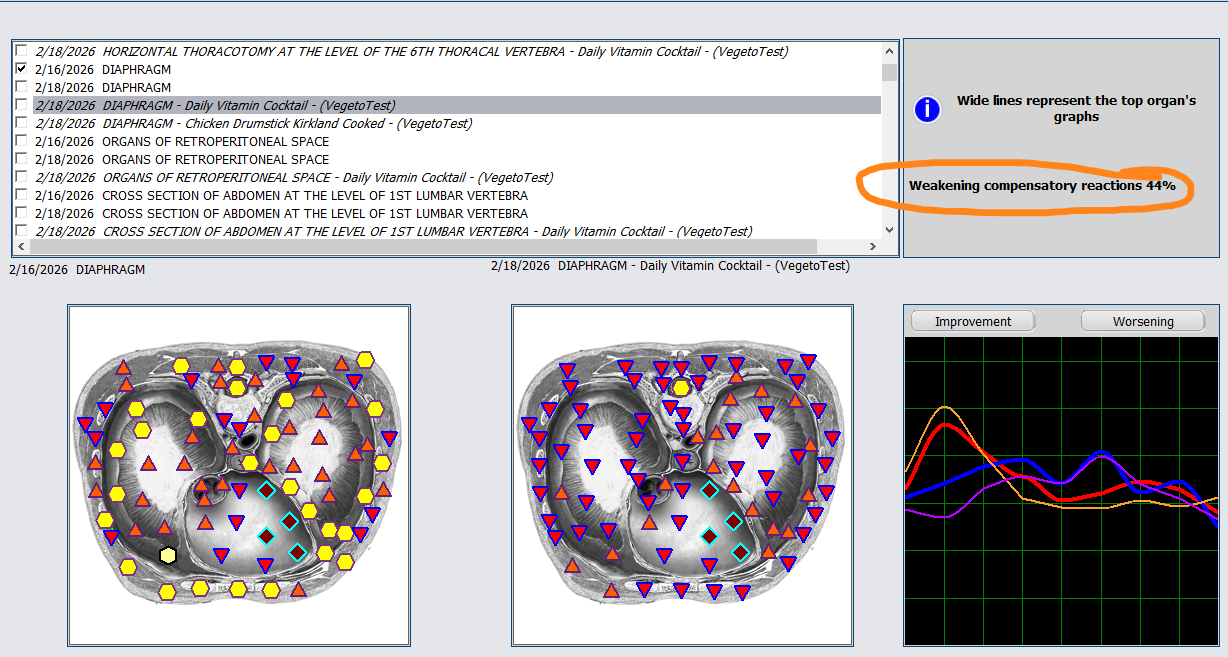
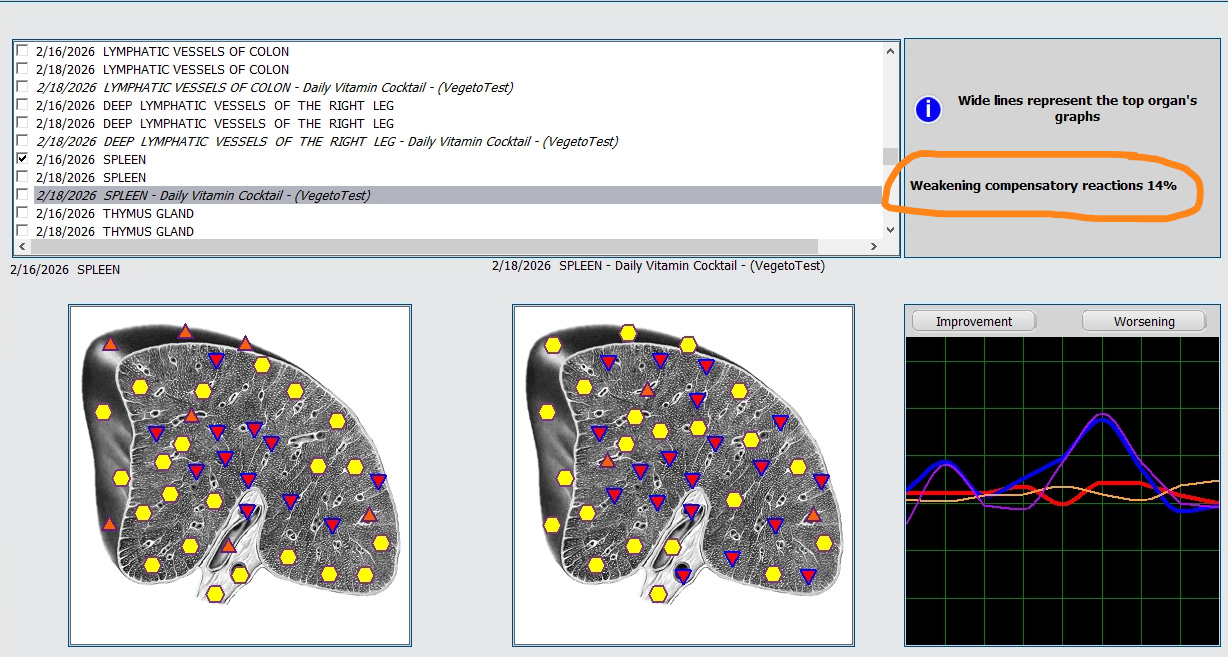
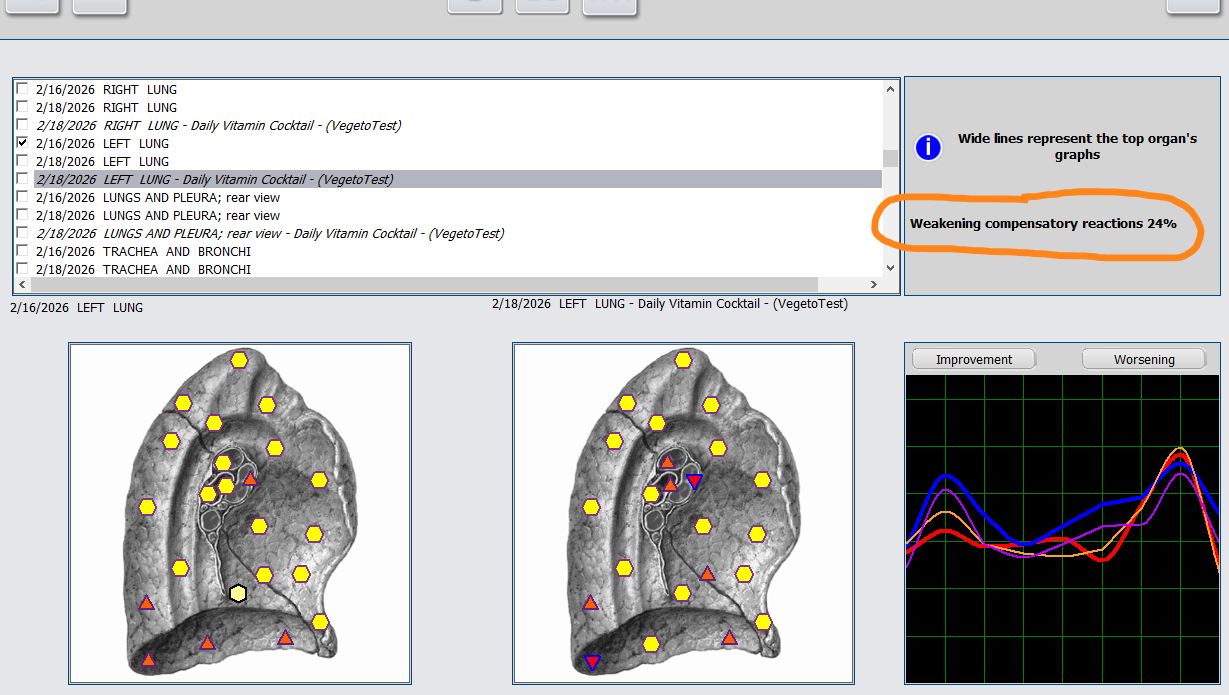
Back to the 14 supplements. I conducted VegetoTests on my vitamin cocktail, so are the results. The before scan is the left one, the after, the scan on the right.
MetaHunter Said:
Some organs got STRONGER:
Thyroid: +56%
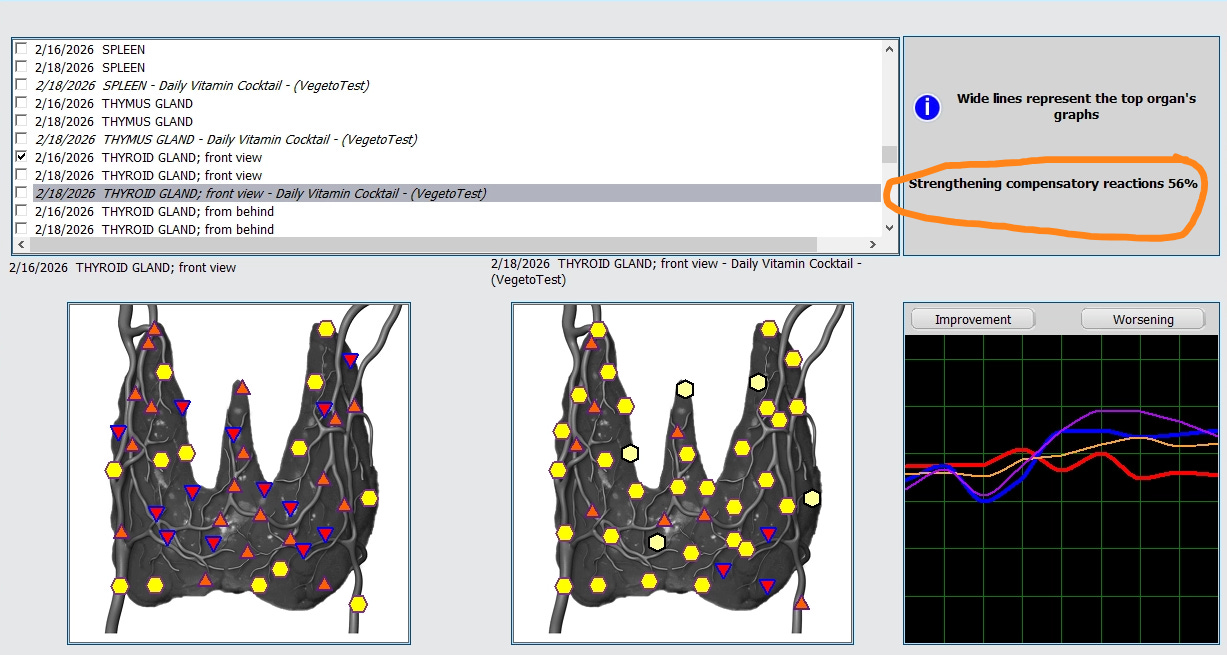
Brain: +26% to +32%
Prostate: +28% to +45%
Pancreas: +6%
But other organs got WEAKER:
Kidneys: -45%
Adrenals: -35%
Heart: Mixed results (-16% to +2% depending on the view)
Diaphragm: -44% (not on my doctor’s list of things to address)
Spleen: -14% (not on my doctor’s list of things to address)
Left Lung: -24% (not on my doctor’s list of things to address)
Lymphatic vessels: -28% (not on my doctor’s list of things to address)

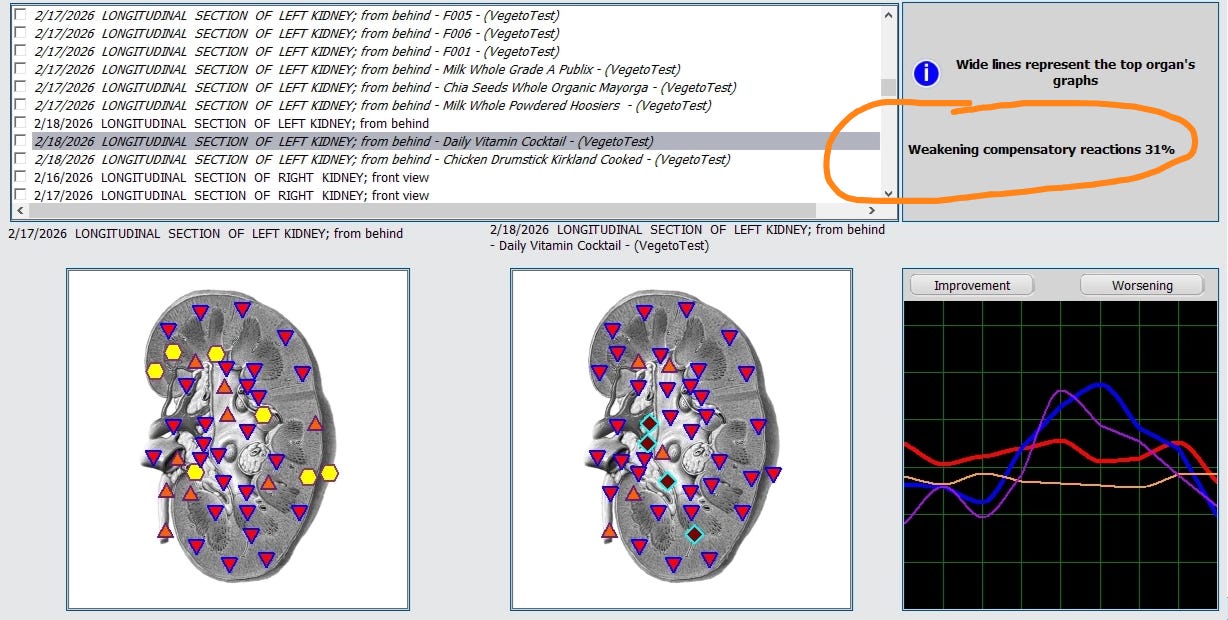
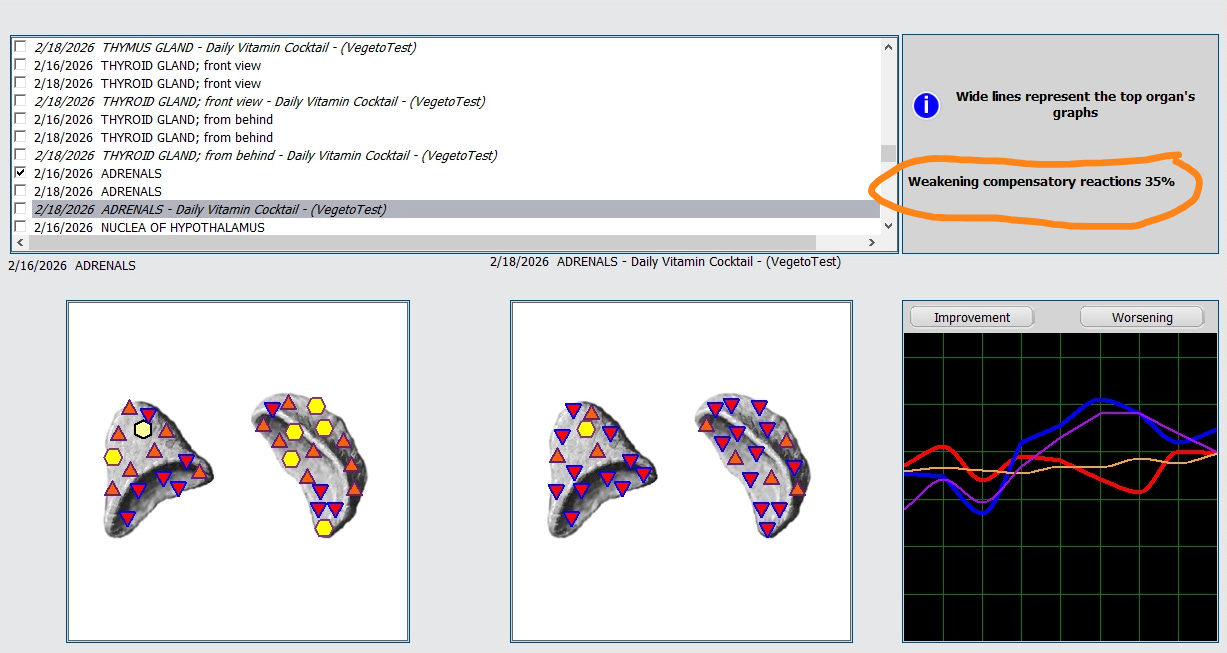
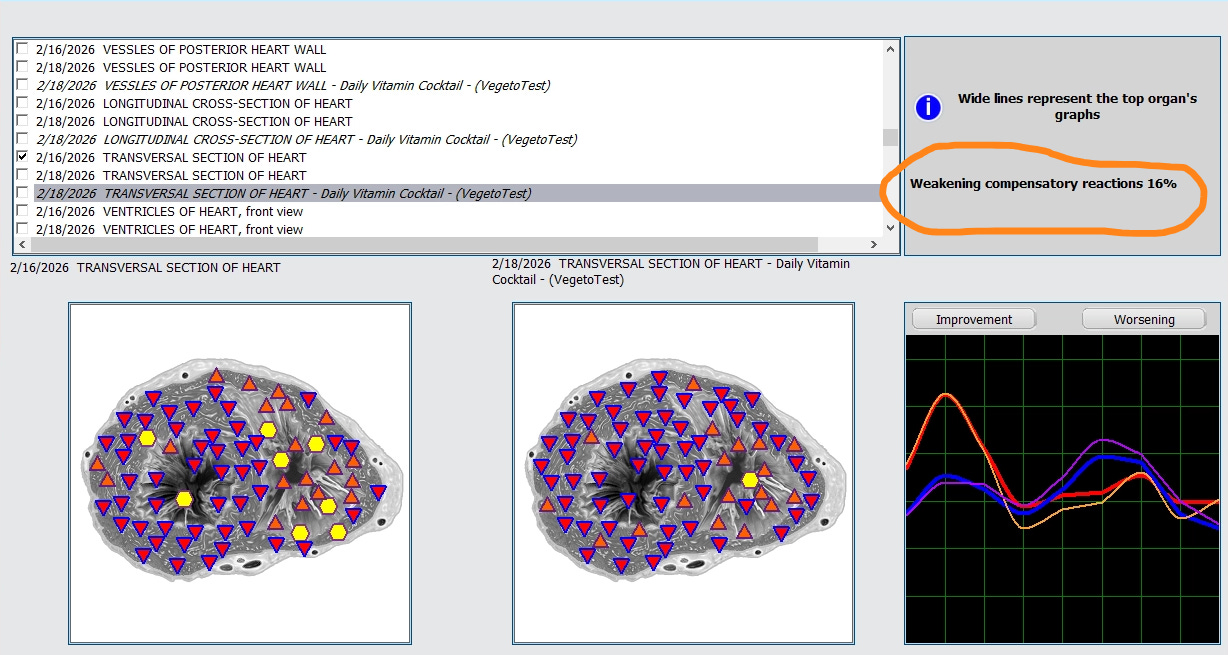
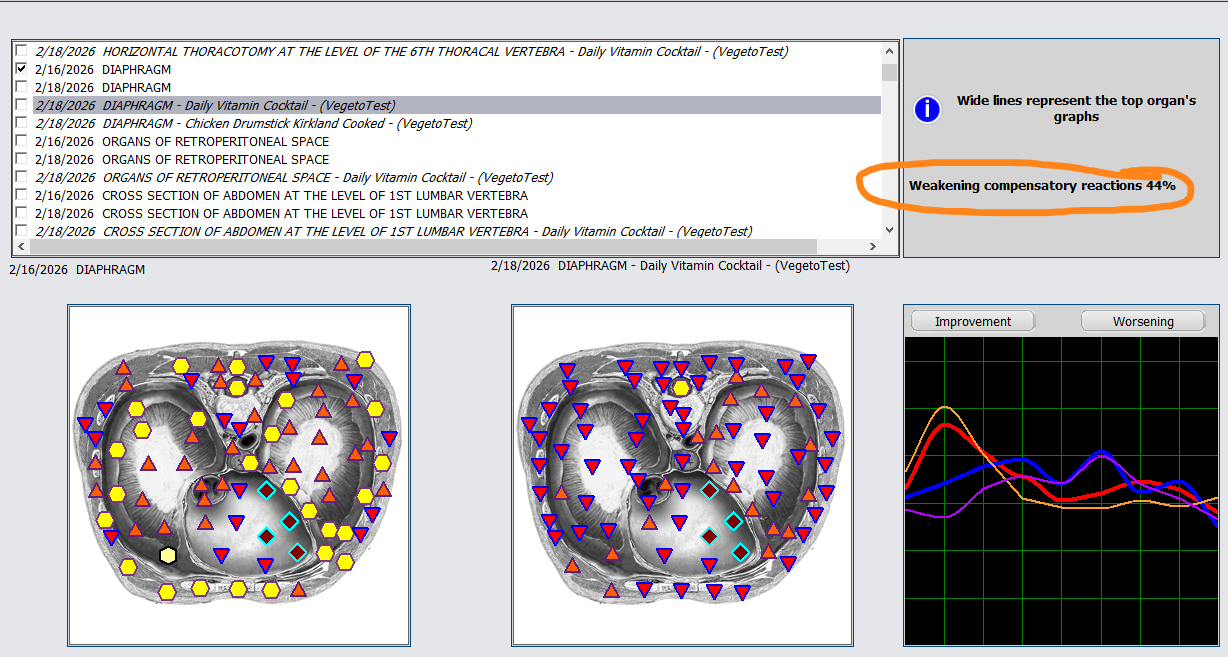
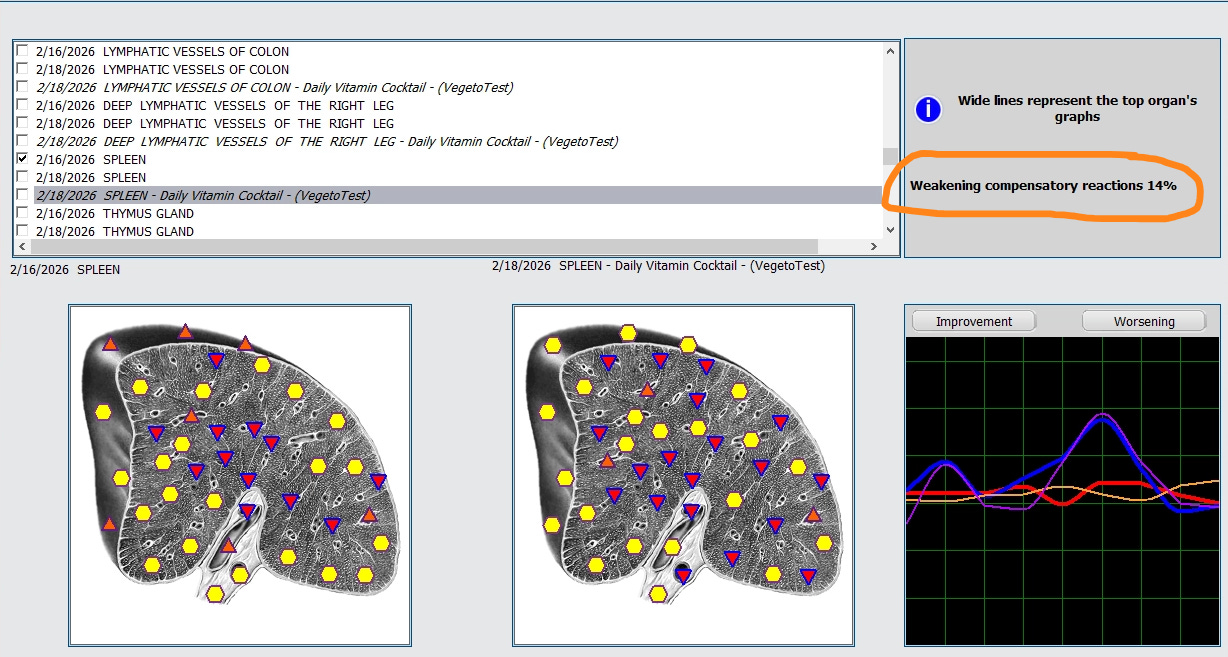
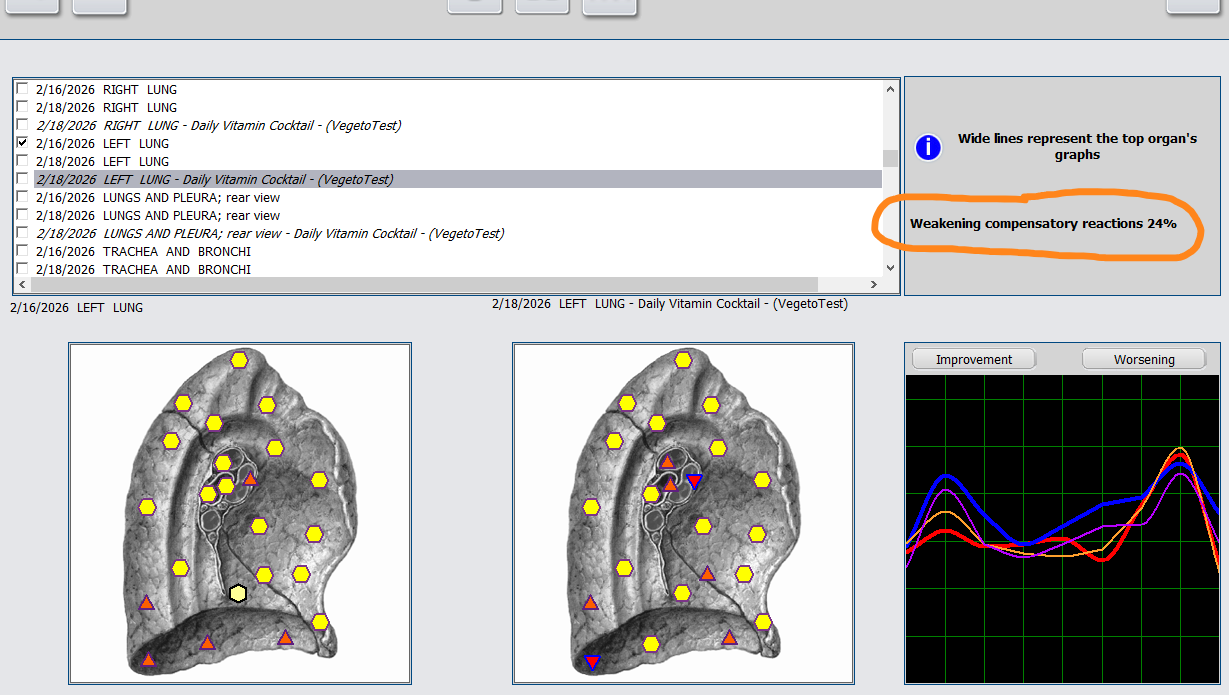

My kidneys were getting 45% weaker while I was taking supplements that were supposed to help them. And it wasn’t just my kidneys. MetaHunter showed my adrenals, diaphragm, spleen, lung, lymph, and parts of my heart were also getting pushed in the wrong direction.
And I had no idea.
I couldn’t feel it. There were no warning signs. No cramps. No pain. Just silent damage happening inside my body, one pill at a time.
The Problem: I Tested Everything Together
Here’s where I made a mistake.
I tested all 14 supplements as one big cocktail. That means I can’t tell which specific supplement is helping and which one is hurting.
Was it one of my doctor’s nine supplements?
Was it one of my five “Facebook/YouTube supplements” interfering with his protocol?
Was it a bad combination of two supplements that individually would be fine?
I don’t know yet.
Now I have to go back and test each supplement individually to find the culprit. I need to dig into the data and figure out which pills are heroes and which ones are villains.
Why This Matters for Everyone
Here’s the thing: I’m not special.
Most people taking supplements can’t “feel” if they’re working. We’re all just trusting:
The label on the bottle
The doctor who prescribed it
The influencer who promoted it
The friend who swears by it
The ad that promised more energy, better focus, stronger immunity
But without objective testing, we’re flying blind.
We’re spending hundreds of dollars a month on pills we hope are helping. We’re mixing supplements from different sources without knowing if they cancel each other out. We’re trusting marketing claims instead of actual data.
Crunchy Nation flips the script on that.
The Vision: 100 People, Real Data, No Hype
Here’s what I’m building:
I want to run tests on 100 healthy people using common products—coffee, supplements, personal care items, foods that claim to be “healthy.” It’s an endless list.
For each product, we’ll measure how it affects specific organs. Then we’ll publish the average results:
“This coffee strengthens the liver by X%”
“This protein powder weakens kidneys by Y%”
“This supplement has no measurable effect”
The data will be free. Public. Accessible to everyone.
No marketing spin. No corporate funding bias. Just crowdsourced, objective numbers so people can make informed decisions about what they put in their bodies.
But I can’t do this alone.
I Need Your Help
I’m looking for:
Financial supporters to help cover testing costs
Study sponsors (brands, researchers) who want to prove their products work and improve them if they don’t.
Test subjects willing to be scanned
People who care about flipping the script on health marketing to spread the word
Support Crunchy Nation
If you want to help fund more real‑world MetaHunter testing and write‑ups like this, there are two simple ways to support the project:
Chip in once (any amount)
Make a one‑time contribution to keep the scans, analysis, and articles going:
👉 Support Crunchy Nation with a one‑time contributionBecome a monthly supporter
Join the small group of readers who cover ongoing scan time and data work each month:
👉 Become a monthly Crunchy Nation supporter
Future project‑level backers (coming soon)
Some readers have asked about fully funding an entire experiment (around $3,500+ for a focused MetaHunter study on one big question). I’m still dialing in the data pipeline before I open that up. If you’d like to be first in line when project‑level slots are available, join the private Project Backer list here: ➜ Yes, I want to back a Research Project
What I’m Doing Next
I’ll test each of my 14 supplements individually. I need to find out which one is damaging my kidneys by 45%.
Then I’ll decide:
Do I stop taking everything and start over?
Do I keep only my doctor’s recommendations?
Do I drop the Facebook/YouTube ones?
Do I show this data to my doctor and see what he says?
I don’t have all the answers yet. But that’s the point of Crunchy Nation—getting the data first, then making decisions based on facts, not feelings or marketing hype.
Stay tuned. This is just the beginning.
Trevor Eisenman
A Fellow Crunchy Conservative
P.S. If you know anyone who’s taking a handful of supplements every day and wondering if they actually work—forward this to them. Let’s figure this out together.
I would love to be a test subject!