


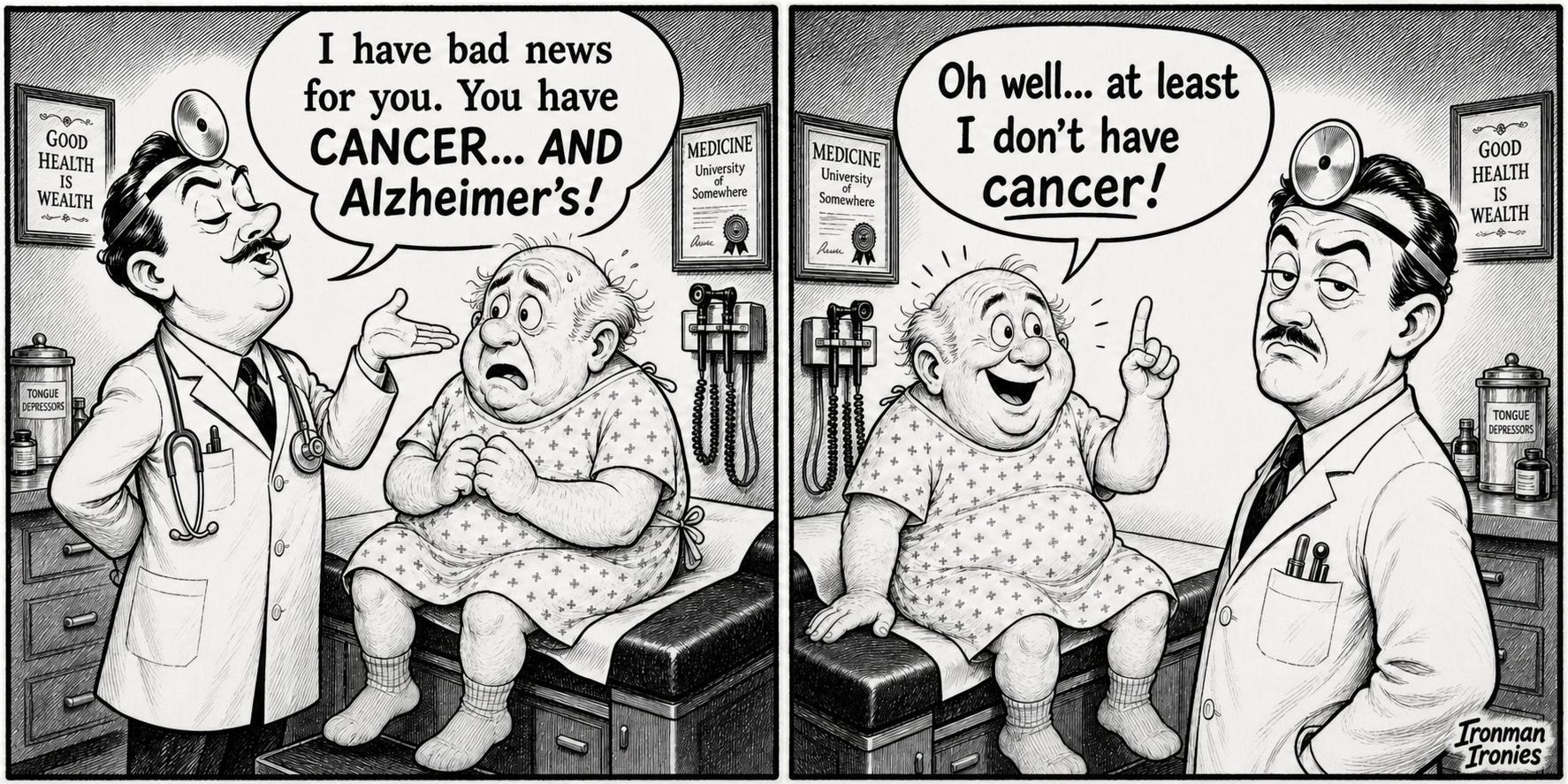
For most of modern medical history, Alzheimer’s has been treated as a one-way disease. You might slow the decline. You might manage symptoms. But reversal was not part of the conversation. For one thing, the spend on Alzheimer’s research by the U.S. federal government is worth $3.9 billion annually. Most projections show explosive growth ahead — Grand View Research forecasts the therapeutics market reaching $15.19 billion by 2030 at a nearly 20% annual growth rate, while other analysts project as high as $29–38 billion by 2033–2035. As the saying goes. “follow the money.”
Just managing the decline may be starting to change, however.
Researchers from Case Western Reserve University, University Hospitals Cleveland, and the Cleveland VA published findings showing that advanced Alzheimer’s disease was reversed in mice through restoration of NAD+, a central molecule in cellular energy metabolism.
Not slowed. Reversed.
According to the researchers, the treatment restored memory, reduced amyloid plaques, reduced tau pathology, and improved brain function even in advanced disease models.
That does not mean a cure for humans is here. Animal studies are not the same as approved clinical treatments. But it does mean a line that sounded permanent for generations — “irreversible” — is now under pressure from the data.
And that matters.
Especially because this research did not arrive with a massive pharmaceutical campaign attached to it. It arrived through university and medical center research, the way many of the most important early signals in health do.
If you want to understand where medicine may actually be going, this is exactly the kind of story worth paying attention to early.
SOURCE LINK SECTION:
📖 READ THE FULL STORY: Cell Reports Medicine, 2026)
If this story stopped you, read the full piece. It is one of those rare research updates that quietly challenges an assumption most people have accepted for their entire lives.
And if you want help finding research like this before it gets filtered into marketing or forgotten entirely, subscribe to Crunchy Nation.