



Most of what gets published in medical journals is not solid, certain truth, especially when the studies are small, early, or very “exciting” according toJohn P. A. Ioannidis (pictured above).
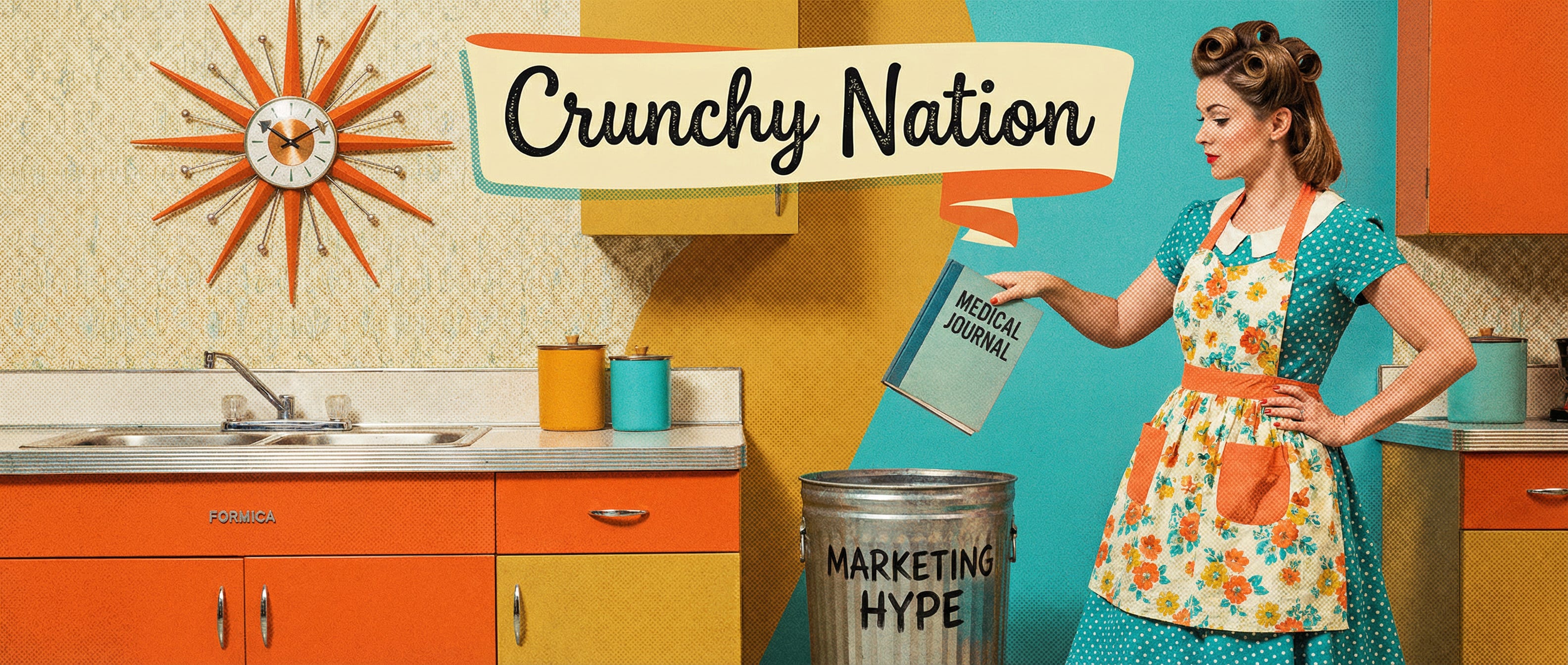
In my mind, I lump today’s Medical Journals as an extension of marketing hype. Cousins from the same family tree. And I suspect these cousins are intermarrying and the results are NOT pretty, if you know what I mean.
John is a doctor and scientist who studies how to make medical research more honest, careful, and trustworthy. He is best known for his famous article, “Why Most Published Research Findings Are False,” which you can read here. He is a Greek‑American professor at Stanford University, one of the world’s leading universities for science and medicine. Many people see him as a world expert on how to design, check, and improve scientific studies, especially in medicine.
I offer a simplified version of the paper below, in support of the need for consumers to test stuff on their own —journals are suspect now and more than likely serve as narrative control. If anything, the recent plandemic proved there was more than “science” at play directing the medical profession.
What the paper really says
Many research “discoveries” later turn out to be wrong or much weaker than first claimed, across many areas of medicine and biology.
The author shows with math that, in many common situations, it is actually more likely that a claimed “positive” finding is false than true, especially when scientists are testing tons of ideas at once.
This problem is worst in fields that search thousands of genes, nutrients, or other factors to see what “pops up” as statistically significant.
Why studies often go wrong
When studies are small (not many people in them) or the real effect on health is tiny, the chance of getting a wrong answer is high, even if the math looks “significant.”
The more freedom researchers have to pick which data, outcomes, or analyses to report, the easier it is (on purpose or by accident) to turn a “no effect” result into a “something works!” headline.
Money, careers, and strong opinions can push people to prefer “positive” results and to hide or downplay results that don’t fit what they want to see.
When a field is “hot”
In “hot” topics where many teams are racing, at least one group will almost surely get a “positive” result just by luck; and that result often gets the most attention.
Later studies may completely disagree, causing a back-and-forth pattern of “this works” then “no it doesn’t,” which shows how shaky the early claims were.
In some areas with very low odds that any tested idea is truly right, the measured “effects” mostly reflect bias and noise, not real cause-and-effect in the body.
What can be said for sure

A single study, even in a famous journal, is almost never enough to be sure something is true about health; you need multiple large, careful, low‑bias studies that agree.
It is impossible to know the full truth with 100% certainty in medicine, and there is no perfect “gold standard” that journals or experts can always deliver.
Because of these built‑in limits, people should not hand over their health decisions blindly to “authorities” or headlines; they need to look at the details, compare different sources, and pay attention to what actually happens in real life and in their own bodies (as safely and carefully as possible).
If you haven’t filled out the Crunchy Nation poll yet, would you take a minute to do that now so I can focus future posts on the questions you care about most? You can find it here: Click here to take the Crunchy Nation poll.
I’m working on a solution right now for flipping the marketing hype for real health - a very interesting solution has come to view and I’ll be able to share it soon.
If today’s post resonated with you, please subscribe and also share it with someone who needs a clearer, less hyped view of health. Even better, comment below with your own experiences of medical or marketing hype and what you think should be done about improving the situation.
Until next time!